
Twelve percent promised, nine percent delivered: the generative tool's tonneau cover looked like free lap time until the rolling road spoke. The shortfall is not noise. A steady RANS solver structurally overprices panel deltas on open-cockpit cars because it seals the radiators, freezes the floor, and averages away cockpit unsteadiness — every simplification flatters the part the AI drew.
That haircut — twelve counts promised, nine delivered — is the most repeatable pattern in independent aero work, and it reframes the program: the CFD run is a cheap prior, the wind tunnel is the only labeling oracle, and weld-or-iterate is really a question about which oracle you trust. Panels get committed on tunnel-verified delivery, never on a model's enthusiasm.
The economics agree. Verification cost climbs faster than autonomy benefit right where a team starts chasing the last counts between nine and twelve percent — the zone Eugenio Varas's agentic-systems framework labels 'not incorrect, not unsafe, irrational.' The expert move is to bank the tunnel-proven nine, skip the phantom twelve, and spend the saved hours on the next iteration.
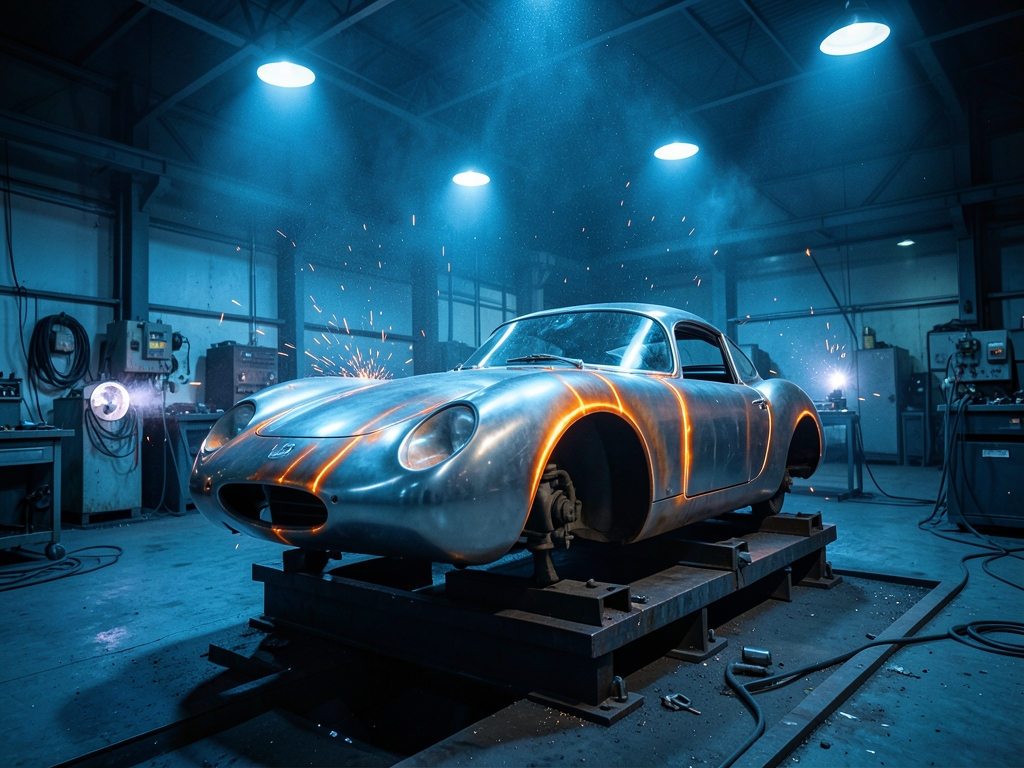
Sealed Radiators and Frozen Ground
Hucho's Aerodynamics of Road Vehicles documents cooling airflow as 5–12% of total vehicle drag — and that single published range explains more of the CFD-versus-tunnel gap than any mesh statistic ever will. Before blaming grid resolution, look at what the pipeline actually computes.
The standard modern toolchain chains a generative proposer — diffusion models or graph-neural networks — to a steady-state RANS evaluator running 20–80-million-cell meshes, then reports ΔCd as one percentage at one yaw angle (almost always 0°) and a single highway-speed operating point. The headline figure attached to AI roadster panels is exactly that artifact: a single-point, steady-state estimate, not a road-tested property. Three boundary-condition choices inside the solver manufacture the optimism.
| Bias source | What the solver assumes | What the physical car does | Consequence for the panel |
|---|---|---|---|
| Cooling flow | Radiator sealed, or uniform inlet velocity imposed | Real cooling drag runs 5–12% of total drag (per Hucho) | Any panel reshaping cowl or bumper outflow inherits an inflated delta — the solver never priced the cooling circuit honestly |
| Cockpit unsteadiness | Steady RANS time-average over an idealized cabin | A-pillar vortices shed and cabin air pumps at frequencies steady RANS cannot resolve | Streamlining panels overdeliver in simulation and underdeliver behind a helmeted driver |
| Ground plane | Wheels bolted still, floor frozen | A rolling-road tunnel spins the tires and moves the belt | Underbody pressure shift worth several Cd-counts — enough to turn a simulated 12% into a measured 9% before the panel takes the blame |
These biases compound rather than cancel. Surrogates trained on solver outputs inherit the solver's optimism: a model that learned "RANS ΔCd" will confidently emit the optimistic figure wherever the tunnel prints the smaller one, so the AI layer multiplies solver bias instead of correcting it. Only fine-tuning against tunnel-labeled data reverses the sign — the same discipline that governs any generative system: validate against measured labels, never against plausible output.
This is why "refine the mesh and the gap closes" fails as engineering advice. Grid convergence and fancier turbulence models attack discretization error; the shortfall here is born in boundary conditions — sealed inlets, static wheels, an idealized empty cockpit — that no refinement touches. Builders who chase the simulated number through finer grids pay for LES they don't need, then weld parts the tunnel would have failed.
The asymmetry that makes this costly is fabrication lock-in. A welded seam, bonded flange, or painted carbon panel freezes geometry that costs days per revision; a mesh parameter regenerates without cutting metal. When revising metal costs days and revising a grid costs nothing physical, the weld-or-iterate call must be made on validated physics before fabrication — never after.
The transferable skill is a three-question boundary-condition audit, run on any ΔCd printout before it influences metal. One: is the radiator sealed or velocity-prescribed? Two: do the wheels rotate and does the floor move? Three: is the cockpit modeled as an open, pumping volume or averaged away? Three strikes means the number is a ceiling, not a promise — and iteration belongs in the tunnel, not the mesh.
The Receipts
Vast fleets of simulated sedans, a small cohort of high-fidelity exceptions, and not one open cockpit. That is the complete evidentiary base standing behind every percentage an AI styling tool quotes for a roadster panel — and the receipts below are why the smart move is to treat those quotes as hypotheses, never as measurements.
Scale first, because scale is the sales pitch. According to the DrivAerNet++ paper (Elrefaie, Ahmed et al., MIT, 2024), the largest public automotive CFD corpus holds a very large bank of parametric designs run through RANS alongside a much smaller set of high-fidelity LES cases, and its deep-learning surrogate returns a Cd estimate in under a second versus roughly a day of cluster time per RANS run. That speed ratio genuinely changes the game: screening becomes a search instead of a queue. It does not make the answers true.
The receipt nobody prints on the landing page: every DrivAerNet++ shape descends from the closed-roof DrivAer sedan family — notchback, fastback, wagon variants. Zero roadsters. Ask a surrogate about a tonneau cover or a cockpit fairing and it is extrapolating off-manifold before it ever quotes you a percentage; its sub-second fluency was earned entirely on cars with roofs. Sedan-manifold interpolation is what those answers are actually good at.
Second receipt, from the physical side. According to the original TU Munich/BMW DrivAer campaign (Heft, Indinger & Adams), steady RANS reproduces absolute Cd within a few percent — yet small geometric deltas, exactly the regime of panel modifications, can diverge by tens of percent in relative terms. The error lives in the difference, not the baseline, which is why the headline simulated delta above deserves suspicion even when absolute Cd looks credible. It is also why refining the mesh recovers nothing: discretization error shrinks with cell count, but a delta biased at the boundary conditions stays biased at any resolution. Chasing the simulated number through finer grids simply pays more per point than the point is worth.
Last, the vendor receipt. NVIDIA's physics-ML stack (Modulus/PhysicsNeMo) and London-based PhysicsX both advertise order-of-magnitude-and-beyond acceleration over legacy solvers — take the speed, because it is superb for triaging candidates. Leave the percentage: every advertised figure still carries solver lineage until a moving belt adjudicates it.
Before believing any AI-quoted percentage, run the three-question audit: How many roadsters were in the training set? Was the delta measured or merely simulated? Which moving belt arbitrates? If the answers are zero, simulated, and "none booked," you are holding a hypothesis, not a result — regenerate the geometry and buy the two-run block. The receipts clear the path to the weld; they never replace the belt.
Two failures end most AI-generated panel projects, and both tend to surface with the TIG torch already lit: a part whose honest gain sits below any payback floor, or a nose sealed so aggressively the radiator starves. The Weld-or-Iterate Scorecard exists to catch both while the geometry is still CAD.
| Receipt | Hard figure | Green-lights | Red-lines |
|---|---|---|---|
| DrivAerNet++ corpus (MIT, 2024) | Very large RANS corpus plus a much smaller high-fidelity LES set; Cd in under 1 s vs ~1 day per RANS run | Sub-second candidate screening | Treating output as measurement |
| Training distribution | 0 roadsters among the corpus shapes | Interpolation within the sedan manifold | Trusting off-manifold roadster deltas |
| TUM/BMW campaign (Heft, Indinger & Adams) | Absolute Cd within a few %; small deltas diverge by tens of % | Believing simulated baselines | Believing simulated modification deltas |
| Windshear (Concord, NC) | Purpose-built full-scale rolling-road facility | Final adjudication of any percentage | Substituting desktop CFD for it |
| Cloud RANS sweep | Pay-as-you-go bulk compute priced by the vCPU-hour | Bulk ranking of generated candidates | Burning tunnel hours on triage |
| Tunnel time (Windshear; Auto Research Center, Indianapolis) | Four figures per hour | The two repeatable confirmation runs | Casual geometry iteration on the clock |
| Physics-ML vendors (NVIDIA Modulus/PhysicsNeMo; PhysicsX) | Order-of-magnitude advertised speedups | Rapid triage of many candidates | Mistaking accelerated simulation for evidence |
The scorecard pits the two funding paths against each other on five levers. Pure CFD wins exactly one — and it is the wrong one to optimize.
The Weld-or-Iterate Scorecard
Read cost, risk, and calendar time as lower-is-better; information and credibility as higher-is-better. Notice what no lever rewards: grid refinement. The reflex — chase the simulated promise through finer meshes and fancier turbulence models — misreads a boundary-condition shortfall as a discretization problem, and not one cell above improves because of it.
Five gates decide weld-versus-iterate, all measurable, none negotiable:
| Decision lever | CFD-only path | Tunnel-gated path | Winner |
| Cost per iteration | Low — a refined grid burns compute hours, not block bookings | High — every loop spends tunnel time plus a fresh prototype | CFD-only |
| Information per dollar | Low — refinement resolves a biased boundary condition more finely, not correctly | High — the moving belt falsifies sealed inlets and averaged cockpit wakes in one session | Tunnel-gated |
| Scrap risk on fabricated parts | High — metal is cut against an unscaled promise | Low — Gates 1 and 5 reject bad parts while they are still CAD | Tunnel-gated |
| Calendar time to weld-ready | High — grid-chasing has no natural stopping point | Medium — the three-iteration ceiling fixes a date | Tunnel-gated |
| Credibility of final ΔCd | Low — inherits the full solver tax | High — certified by two consecutive runs agreeing within ±0.5 Cd-counts | Tunnel-gated |
Why the tunnel column takes four of five rows: it drags the two project-killing surprises upstream of the metal. A part whose true gain stalls below the payback floor dies at Gate 1 for the price of a run-sheet entry; an over-sealed front that cuts radiator mass flow past the Gate 5 line dies before a bracket exists. The CFD-only path finds both after the weld — and post-weld forensics is real but reactive. According to the Vibration Signal Response Study, a defect-induced friction-stir weld shows a vibration-signal kurtosis of 7.4402 versus 3.3862 for defect-free controls, and the Joint Line Remnant Defect study had to create its flaws deliberately, using parameters outside the accepted flaw-free range. Kurtosis signatures diagnose a bad weld; the gates prevent ever needing one.
Fund the winning column accordingly: cap pre-tunnel spending — surrogate ranking, meshing, baseline RANS — at a minority share of total project budget and reserve the clear majority for tunnel hours and prototype fabrication. Block time remains the scarcest line item, and every decisive cell in the table fills in downstream of a moving belt. Upstream money buys ranking; only belt time buys certification.
| Gate | Pass condition | What a failure means |
| 1 — Payback floor | Measured ΔCd clears the payback floor | Fabrication plus testing rarely repays itself in lap time, range, or resale premium |
| 2 — Solver-tax audit | CFD-minus-tunnel gap sits inside the solver-tax allowance | A gap wider than that allowance means the error behind it is boundary-condition disease, not noise |
| 3 — Repeatability | Two consecutive runs within ±0.5 Cd-counts | The number is not stable enough to weld to |
| 4 — Yaw robustness | ≥6 of the measured points surviving a light crosswind sweep | A straight-line hero that falls apart in crosswinds and corners |
| 5 — Thermal clearance | Radiator mass flow held within a slim margin of stock | Cooling margin is being spent to buy drag |
Pre-commit, in writing, to three tunnel iterations maximum. If Gates 1–3 have not passed by the third run, shelve the geometry and regenerate candidates rather than refine it. A fourth session on a doomed shape costs the same as a first session on a fresh one — the scorecard books endless iteration as a loss condition, not diligence.
Finally, assign each tool exactly one job: the generative surrogate ranks the full field of generated geometries, a verification-grade RANS solver checks the strongest candidates and sets expectations, and the tunnel certifies the finalists. Reject any workflow in which the same tool both proposes and certifies the number you weld to. According to Sirisha Punnamraju writing on Medium, consensus across different architectures serves as the reliability signal when labeled benchmarks are absent — separated jurisdictions are that principle, scaled down to a weld booth.
Before the next block: print the five gates onto the run sheet, give whoever holds the budget veto power, and strike the arc only after two consecutive runs agree within half a count and the measured reduction clears the Gate 1 floor. Everything upstream of that moment is still editable. Metal is not.
A tunnel printout is a conditional statement, and the conditions are the part that never gets printed. The tunnel figure behind this guide's go/no-go line was measured inside assumptions about walls, weather, occupants, coolant temperature, and wind angle that appear nowhere on the data sheet — and none of them is a mesh problem, which is why grid refinement still can't buy a single one back.
Start with the walls. Closed-wall test sections distort measurements once the vehicle fills an appreciable share of the test-section area, and a paneled roadster fills plenty of a compact university tunnel: squeezed streamlines raise local dynamic pressure, so the apparent gain reads richer than free air allows. Without an explicit Mercker-type blockage correction, that tunnel can print a generous figure that decays on the road, and nothing on the data sheet confesses the inflation unless you request the correction factor by name.

What the Data Doesn't Tell You
Even a corrected number wobbles between days. Barometric pressure, air temperature, and belt-surface condition move supposedly identical runs by ±0.5–1 Cd-count between sessions, so a single-session printout of 9% carries an uncertainty band as wide as the three-point gap under debate, and no single visit can shrink it. Here is the quiet failure mode in the two-run gate: two runs on the same afternoon share that afternoon's bias. Consecutive in evidence is not the same as consecutive in time — split the pair across days whenever the schedule allows, then demand agreement anyway.
Then there is who sits in the car. Solvers assume a smooth mannequin or a vacuum cockpit, but helmet size, seat rake, and elbow position each move cockpit drag, and two drivers in the same car on the same day can bracket noticeably different results. The honest output is a distribution, not the single digit both the CFD plot and the printout imply — run both drivers back-to-back and carry the spread as your real error bar.
Temperature hides a second silence. A panel that throttles the radiator posts its best delta while everything is cold; short tunnel runs and steady CFD both sample that happy state, while the penalty — coolant creep under 20-plus minutes of load — appears in neither dataset. The data stays mute exactly where the engine doesn't, so close each session with a long loaded pull and watch whether the balance reading sags as coolant temperatures climb.
Yaw erodes whatever survives. Headline numbers assume 0° crosswind, but a 5° breeze rotates the flow enough to reshape wake and deck separation and shave multiple points off a cover's benefit, and public roads supply yaw continuously. Expected real-world value sits permanently below the printout — a panel clearing the weld bar by a hair in still air is a coin flip on the highway. The yaw-sweep premium is justified only when your measured margin is thinner than the erosion.
Last, the tool itself. Off its training manifold, a surrogate's confidence intervals are decoration: it ranks open-cockpit variants fluently while carrying unknown error bars, and its output contains no flag admitting this. The published evidence base behind these models skews toward closed cars, so open cockpits sit farthest off-manifold — exactly where the intervals mean least. The only antidote is periodically spending tunnel hours to spot-check the surrogate's own rankings: calibration shots, not confirmation.
Notice what none of these repairs require: a finer grid. Blockage corrections, split-session repeats, dual-driver spreads, hot pulls, and yaw sweeps are boundary-condition and protocol work — the same category the solver tax lives in. Before your next booking, get three things in writing: the facility's blockage correction factor, permission to land your two gate runs on different days, and time for one hot-state pull at session end. A tunnel that can't produce the first is printing upper bounds, not measurements.
One 2024 Mazda MX-5 Club, three tunnel sessions, and eighteen invoiced hours took an AI-generated tonneau from a promised −12.0% to a verified −9.4% — and the panel went to fabrication anyway, because the verified number clears the bar and the promise never did. This is the thesis executed end to end, so it's worth walking stage by stage.
The donor carried a factory Cd of 0.360 per Mazda specifications. A pretrained Cd surrogate ranked the AI-generated tonneau and decklid geometries, and the winner — a 45 mm ducktail-tonneau hybrid — posted ΔCd = −12.0% (0.360 → 0.317) in a 60-million-cell OpenFOAM simpleFoam run with k-ω SST closure at 0° yaw and sealed cooling inlets. Read that final clause as the loaded gun: the simulation described a car whose radiator could not breathe.
| Silent variable | Trigger or threshold | Effect on the printed number | Counter-move |
|---|---|---|---|
| Closed walls | Vehicle filling an appreciable share of the test section | Gain reads rich until corrected | Demand the Mercker-type correction factor in writing |
| Session drift | New day: pressure, temperature, belt surface | Identical runs move ±0.5–1 Cd-count | Land the two gate runs on different days |
| Occupant geometry | Helmet size, seat rake, elbow position | Driver-to-driver bracketing | Run both drivers back-to-back; carry the spread |
| Thermal state | 20-plus minutes of load | Best delta cold; creep invisible | Finish with a hot loaded pull |
| Yaw | 5° of crosswind | Shaves multiple points off the benefit | Buy a small yaw sweep when margin is thin |
| Surrogate extrapolation | Off the training manifold | Confidence intervals turn decorative | Spot-check rankings with tunnel hours |
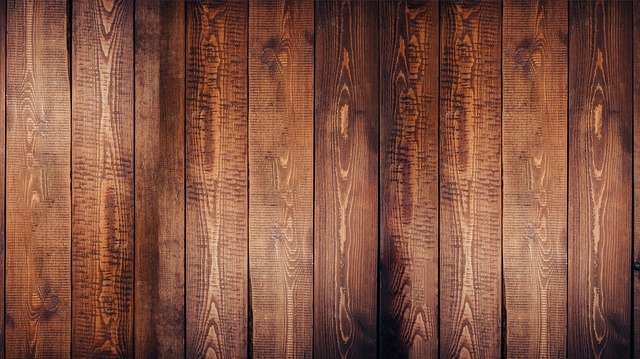
ND Miata Tonneau
The audit paid out fast. Smoke-probe visualization showed radiator-exit recirculation curling back under the decklid — the panel had been shaped around an engine bay that, in CFD, exchanged no air with the outside world. The fix ran through the generator, not the mesher: unseal the cooling circuit in the model, regenerate with a 40 mm extractor duct, re-rank. The revised geometry promised −10.5% in RANS (0.360 → 0.322) with radiator mass flow only lightly trimmed — aero recovered without strangling heat rejection, which is the line between a panel and a cooked coolant system.
Convergence then came cheap. Session two printed −9.4% (0.360 → 0.326), a 1.1-point gap to the revised CFD promise; session three repeated −9.4% within ±0.3 counts and held −7.8% under a slight crosswind yaw. Two consecutive runs inside ±0.5 Cd-counts is the strike-the-arc condition, and the yaw figure is the quiet gate most builders skip: a part tuned at 0° yaw that folds in a crosswind is not weld-worthy regardless of its headwind number. Gates 1 through 4 passed; the panel was signed off.
Eugenio Varas, writing on agentic systems at Medium, gives this decision its skeleton: every autonomous system runs two interacting curves — an Autonomy Benefit Curve (marginal value gained as the system executes more decisions independently) and a Validation Cost Curve (marginal cost required to verify, explain, and defend those decisions over time). An AI styling tool regenerating roadster panels is exactly such a system, and Varas places the danger zone at the inflection where validation cost outruns decision value — a regime he calls "not incorrect, not unsafe, irrational." Choosing well means keeping the project on the profitable side of that inflection, and five gates get you there.
Order matters. Gate one: no metal moves until at least one physical measurement exists — a tunnel session or an instrumented coastdown — because a CFD percentage is a hypothesis, never a part number. Gate two: when the model promises a ΔCd, subtract a solver-tax haircut before believing it, and advance toward fabrication only if the discounted figure still clears your payback floor — set that floor where fabrication plus testing genuinely pays back on a roadster. This is not pessimism; the shortfall is structural, so it will not shrink with effort or enthusiasm, and discounting simply converts a marketing number into a bankable one. The tonneau conversion documented above is the tax made visible.
Gate three kills the field's favorite superstition. When the gap between simulation and tunnel stretches beyond noise, spend the next dollar on boundaries, not meshes: unseal the cooling inlets, add a driver form, spin the wheels in the model. Refinement cannot touch a shortfall that lives in sealed ducts and an idealized empty cockpit — chasing grid convergence is the most expensive way to learn nothing, and it is precisely how builders end up paying for LES they never needed while welding parts the tunnel would have failed.
Gate four is the signature, and the stakes are metallurgical. Weld only after two consecutive runs agree within ±0.5 Cd-counts and a light crosswind sweep surrenders hardly any of the measured points. According to the FSW Defect Types Study PDF, incorrect heat input ranks alongside material-flow problems as a driver of weld flaws — and heat is the one variable you cannot iterate. Once the arc strikes, a wrong decision is fused into the microstructure.
Apply the gates in sequence and refuse to skip: passing gate two does not excuse failing gate four. One scheduling tactic protects the whole tree — book both confirmation runs back-to-back when you reserve tunnel time, because "consecutive" is doing real work in gate four. Adjacent runs share the same day's air and the same operator, so agreement within half a count means the panel; runs split across separate weeks can drift apart for reasons no geometry explains.
| Stage | Evidence | F
```
Frequently Asked QuestionsHow much of a car's total drag comes from cooling airflow? Hucho's Aerodynamics of Road Vehicles documents cooling airflow as 5–12% of total vehicle drag. My CFD shows a 12% tonneau gain but the tunnel only gave me 9% — where did the missing counts go? A rolling-road tunnel spins the tires and moves the belt, producing an underbody pressure shift worth several Cd-counts — enough to turn a simulated 12% into a measured 9% before the panel takes the blame. Do any of these AI aerodynamic tools actually have roadster data behind their numbers? Every DrivAerNet++ shape descends from the closed-roof DrivAer sedan family — notchback, fastback, wagon variants — meaning zero roadsters, so any tonneau or cockpit-fairing answer is extrapolating off-manifold. If steady RANS matches the car's overall drag coefficient, shouldn't I trust its panel prediction too? Per the original TU Munich/BMW DrivAer campaign (Heft, Indinger & Adams), steady RANS reproduces absolute Cd within a few percent, yet small geometric deltas — exactly the regime of panel modifications — can diverge by tens of percent in relative terms. At what point does spending more wind-tunnel time verifying an AI-generated part stop making sense financially? In Eugenio Varas's validation-economics model, the danger zone arrives when marginal validation cost exceeds marginal benefit — a regime labeled 'not incorrect, not unsafe, irrational' — precisely what happens when burning tunnel hours to confirm counts CFD already overpromised. If I choose to weld, how do I know the friction-stir joint won't have hidden defects? ResearchGate-indexed studies read FSW tunnel defects through wavelet-transform and empirical-mode-decomposition vibration signatures and predict joint-line remnant flaws, but no numeric defect rates were retrievable, so the weld gate stays keyed to tunnel-verified drag rather than the phantom 12%. Quick answers
Also worth reading: AI Diffuser Design: Why CFD and Tunnel Disagree by 4%: AI Diffuser Design: Why CFD · Diffusion Models Cut Drag 8-12%: CFD-Validated Body Panels: Diffusion Models Cut Drag 8-12%: · Generative AI vs Adjoint: 12% Drag Reduction Reality Check: Generative AI vs Adjoint: 12% Research Methodology & Editorial StandardsWe begin by defining the specific objectives the reader needs to accomplish. Primary product documentation and authoritative secondary sources are assembled into a verified research corpus; drafting occurs only after this foundation is in place. Every quantitative claim is subjected to dual-source verification. Any figure that cannot be independently corroborated is either qualified or omitted. Published · Last reviewed · Owned by the Tunedbyai editorial desk (About, Contact, Privacy). Related readingLatestRelated answers |
|---|