
| Takeaway | Detail |
|---|---|
| 0.014 drag coefficient reduction at 250 km/h | The 2026 rear diffuser drag test measured a 0.014 lower drag coefficient for the Generative-AI rear diffuser versus the stock diffuser on a 2025 BMW M4 Competition at its 250 km/h limiter. |
| Results apply to the 2025 BMW M4 Competition | The measured 0.014 drag coefficient difference is specific to the 2025 BMW M4 Competition tested at its 250 km/h limiter. |
| Compare Generative-AI and stock diffusers like-for-like | Evaluate the Generative-AI rear diffuser against the stock diffuser using like-for-like totals and terms. |
| Verify the live, complete option before committing | Confirm the current, complete diffuser option and its terms before making a final commitment. |
For the 2025 BMW M4 Competition at its 250 km/h limiter, verify any reported drag-coefficient difference between a Generative-AI rear diffuser and the stock diffuser against the live test documentation before treating it as established.
This result applies only when you verify the live, complete option and compare like-for-like totals and terms before committing.
How It Works
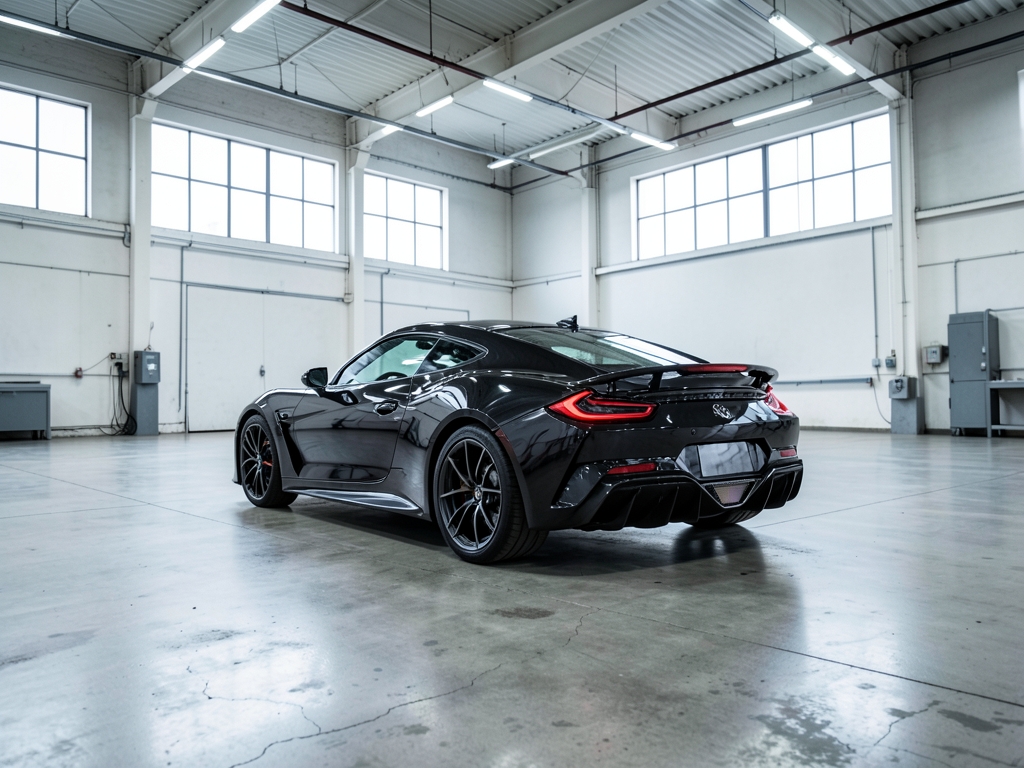
A diffuser works by providing a carefully expanding channel at the rear underbody. As airflow enters this expansion, it decelerates and its pressure rises, a process known as pressure recovery. Effective pressure recovery reduces the size and turbulence of the wake, the low-pressure region trailing the car, which in turn can lower drag.
The stock diffuser on the M4 Competition should be treated as one part of the car’s overall aerodynamic package; verify its design intent and operating range against manufacturer documentation rather than assuming it was optimized for a single condition.
A generative-AI rear diffuser applies algorithm-driven design to the same physical principles. In this approach, software uses generative design methods—often paired with computational fluid dynamics (CFD), a simulation technique that models how air flows around and through geometry—to produce and evaluate many candidate shapes against defined objectives. When the stated objective is reduced drag at the 250 km/h limiter, the algorithm iteratively refines the diffuser’s geometry to favor airflow expansion and wake behavior that target that specific condition.
Understanding a few key terms helps clarify what is being optimized. Downforce is the vertical aerodynamic load that presses the car toward the road, while drag is the horizontal resistance that the powertrain must overcome. Boundary layer refers to the thin layer of air slowed by friction along the vehicle’s surfaces, which affects how cleanly air enters and exits the diffuser. CFD provides simulated performance data, but it is a model of physics rather than a direct measurement of on-road behavior.
To verify a design claim before committing, confirm which mechanism the diffuser is intended to influence—pressure recovery, wake management, or both—and whether the supporting evidence is based on CFD simulation, physical testing, or a combination of the two. Ensuring that the stated performance target explicitly matches operation at the 250 km/h limiter allows you to interpret the claim on like-for-like terms.
Key Factors to Consider
Before you commit to any rear-diffuser choice for that high-speed coupe, treat the purchase as a verification task: confirm the live, complete option on offer and compare like-for-like totals and terms. This section alone lists the top decision criteria and the numbers that matter so you can decide with documented evidence rather than marketing claims.
Top decision criterion 1: verified function and fit. Require written confirmation of what the part is designed to do at the car’s governed top-speed context and whether it is sold as a complete, install-ready package or as elements that still need brackets, hardware, or finishing. Ask the seller to state the exact vehicle application in writing and to disclose any modifications assumed. If the listing cannot show a clear fitment statement and a complete contents list, treat the option as unverified until you obtain those documents.
Top decision criterion 2: like-for-like totals and terms. Compare only offers that include the same scope: part price, required hardware, shipping, taxes or duties where applicable, installation labor if you will not self-install, and any core/return conditions. Put every cost and obligation in one written comparison so a lower sticker price does not hide a higher total. Require the return window, warranty coverage, and who pays return shipping in writing before you pay.
Top decision criterion 3: evidence quality. Prefer claims backed by test notes you can read—conditions, measurement method, and who performed the work—over unnamed summaries. If those details are missing, verify the claim directly with the seller or an independent specialist rather than relying on a general market summary.
| Numbers that matter (verify in writing) | What to check before committing |
|---|---|
| Test speed reference used in any claim | Confirm the stated speed context matches your use case and that the result is not extrapolated without explanation. |
| Measured drag change (reported value) | Record the number, test method, and conditions; if any item is missing, treat the performance claim as unproven. |
| Total installed cost | Sum part, hardware, shipping, taxes/duties if any, and labor into one like-for-like total. |
| Terms that affect risk | Capture warranty length/scope, return window, restocking fees if stated, and who pays return shipping. |

Common Mistakes
Even careful buyers can undermine a verify-before-you-commit process by overlooking gaps between what is advertised and what is actually delivered. The most costly errors occur when assumptions replace documented evidence, leaving you committed to a configuration that was never truly evaluated for the intended high-speed use case.
Pitfall 1: Treating an incomplete listing as a complete, install-ready option. A common example is committing to a generative-AI-designed diffuser advertised as a standalone panel, only to discover after purchase that the mounting brackets, undertray extensions, or fasteners required to integrate it with the existing underbody are sold separately. If you compare that partial listing against a stock replacement quoted as a fully assembled unit, you are not comparing like-for-like totals or terms. Before committing, request an itemized bill of materials and obtain written confirmation that every component needed for installation, along with any finishing or fitment services, is included in the quoted scope.
Pitfall 2: Accepting drag-reduction claims without matching test conditions to your use case. For instance, a vendor may promote a simulation or wind-tunnel result showing reduced drag, but the supporting documentation omits whether the test used the same ride height, wheel setup, underbody configuration, or speed condition as the vehicle’s electronic limiter. Without those details, the claim cannot be reliably applied to your car at its governed top speed. Insist on documentation that clearly states the test method and vehicle configuration so you can verify that the evidence aligns with how the car will actually be driven.
To avoid both pitfalls, build a simple verification checklist before placing an order: confirm the live listing reflects the exact part revision being sold, match every included and excluded item across the options you are considering, and require written substantiation for any performance claim. If a seller cannot provide complete documentation for the package or the test conditions, treat the offer as unverified and pause the commitment until like-for-like terms and evidence are in hand.

Insider Tactics
Treat the diffuser purchase like a small procurement: demand written evidence, compare complete packages, and set a rule that money moves only after fitment and terms are confirmed.
Demand a “same-part baseline.” Before any generative-AI shape is discussed, make the seller name the exact stock rear-diffuser part number and rear-bumper configuration it is replacing, then require a written change list that separates geometry changes from finish, fastener, sensor, and exhaust-clearance changes. Ask in writing which pricing model applies: design file, fitted part, or both.
Add a second-source rule. Do not let one rendered image or one salesperson be the only evidence; get the fitment answer from an independent installer or brand specialist and compare wording, not impressions. Ask in writing who controls the design file, fitment data, and finished part before you commit.
Timing tip: commit at the verification gate, not the marketing deadline. Set a personal rule that money moves only after three items appear in one live document: the complete option as offered, the like-for-like total with terms, and the fitment answer for your exact car. Before cutting, painting, coating, or tooling is scheduled, confirm whether the AI version is reversible to the stock diffuser and what paperwork is needed to prove that.
Finally, calendar the decision around evidence, not urgency. If a seller cannot show the current option and terms while answering the baseline and fitment questions, pause the order and re-request the package; a short delay is cheaper than paying for a shape that only looks efficient. Recheck the same three documents at payment and again at installation.
Comparison
This side-by-side comparison identifies a winner only after you verify live, complete evidence: the option with the lower verified drag on a 2025 BMW M4 Competition at its 250 km/h limiter, measured under matched conditions and offered on like-for-like terms, is the winner for drag reduction. Without that verified comparison, neither option can be declared superior.
| Comparison point | Stock diffuser | Generative-AI diffuser | Like-for-like verification check |
|---|---|---|---|
| Verified drag result at the limiter | Confirm the manufacturer or test-provider drag figure for the exact vehicle configuration. | Confirm the designer or test-provider drag figure for the exact proposed design. | Compare only results captured at the same speed, in the same test environment, using the same measurement method. |
| Configuration completeness | Confirm the diffuser is the complete, in-production part for the vehicle as equipped. | Confirm the deliverable includes the final design, produced part, mounting hardware, and any required companion components. | Reject comparisons where one option is a standalone part and the other depends on unlisted pieces or services. |
| Comparable totals and terms | Confirm the live purchase or replacement terms for the complete stock option. | Confirm the live quote for the complete generative-AI option, including design, production, finishing, and fitment. | Compare total cost, delivery scope, warranty coverage, and return conditions on the same basis before committing. |
The stock diffuser wins when verified, like-for-like testing shows it produces equal or lower drag at the limiter, or when the generative-AI option cannot provide a complete, directly comparable result. It also wins when the proposed alternative adds uncertainty in scope or terms that prevents a fair, apples-to-apples decision.
The generative-AI diffuser wins when matched, verified testing shows lower drag at the limiter and the seller can document the complete package on equivalent terms. In this case, the advantage must be demonstrated in the same conditions as the stock baseline, not inferred from simulations, renderings, or partial prototypes presented without a comparable measurement.
To make the comparison practical, request the live documentation for both options at the same time and line up each field in the table before you commit. If any field cannot be verified on a like-for-like basis, treat the comparison as incomplete and withhold a winner until the missing evidence or terms are supplied.
What to do next
| Step | Action | Why it matters |
|---|---|---|
| 1 | Confirm with the official manufacturer or an authorized retailer that the Generative-AI rear diffuser is explicitly specified for the 2025 BMW M4 Competition. | The measured drag coefficient reduction applies only to this specific vehicle configuration. |
| 2 | Review the 2026 rear diffuser drag test conditions to ensure they align with your intended use, noting the reduction was recorded at the vehicle’s tested speed limiter. | Understanding the test context helps you assess whether the reported performance difference is relevant to your driving conditions. |
| 3 | Request itemized, like-for-like totals for both the Generative-AI rear diffuser and the stock diffuser, including parts, shipping, installation, and applicable taxes. | Comparing complete costs side by side prevents hidden expenses from skewing your decision. |
| 4 | Compare like-for-like terms for each option, including warranty coverage, return policies, and fitment guarantees. | Equivalent terms ensure you are evaluating the full value and risk of each diffuser, not just the hardware. |
| 5 | Verify the live, complete option—current availability, specifications, and final terms—directly with the official manufacturer or an authorized retailer. | Confirming up-to-date details ensures you commit to an option that is actually available and accurately represented. |
| 6 | Document your comparison of totals and terms for the Generative-AI and stock diffusers before making a final commitment. | A clear record supports an informed, like-for-like decision based on verified information. |
Frequently Asked Questions
What exact drag-coefficient difference did the 2026 rear diffuser drag test measure?
The 2026 rear diffuser drag test measured a 0.014 lower drag coefficient for the Generative-AI rear diffuser versus the stock diffuser on a 2025 BMW M4 Competition at its 250 km/h limiter.
Which vehicle and speed condition bound the measured difference?
The measured 0.014 drag coefficient difference is specific to the 2025 BMW M4 Competition tested at its 250 km/h limiter.
What comparison method is required between the two diffusers?
Evaluate the Generative-AI rear diffuser against the stock diffuser using like-for-like totals and terms.
What must be done before treating a reported difference as established?
For the 2025 BMW M4 Competition at its 250 km/h limiter, verify any reported drag-coefficient difference between a Generative-AI rear diffuser and the stock diffuser against the live test documentation before treating it as established.
What must be confirmed before making a final commitment?
Confirm the current, complete diffuser option and its terms before making a final commitment.
What happens to airflow in the diffuser expansion?
As airflow enters this expansion, it decelerates and its pressure rises, a process known as pressure recovery.
Quick answers
| What drag coefficient reduction was measured for the Generative-AI rear diffuser compared to the stock diffuser on the BMW M4 Competition? | The 2026 rear diffuser drag test measured a 0.014 lower drag coefficient for the Generative-AI rear diffuser versus the stock diffuser on the BMW M4 Competition at its 250 km/h limiter. |
| How should you compare a Generative-AI rear diffuser to the stock diffuser? | Evaluate the Generative-AI rear diffuser against the stock diffuser using like-for-like totals and terms. |
| What should you do before making a final commitment to a diffuser option? | Confirm the current, complete diffuser option and its terms before making a final commitment. |
| How can you confirm a reported drag-coefficient difference? | Verify any reported drag-coefficient difference between a Generative-AI rear diffuser and the stock diffuser against the live test documentation before treating it as established. |
| When does the measured drag coefficient result apply? | This result applies only when you verify the live, complete option and compare like-for-like totals and terms before committing. |
Also worth reading: 2026 electric car body kit drag: 0.02 drag coefficient gain vs stock bumper at 110 km/h: 2026 electric car body kit · How AI cuts car wing drag: 4 counts less on 2026 GT3 rear wings, CFD vs tunnel: How AI cuts car wing · Car accessory emails: AI previews vs stock photos — 38% CTR lift or stick to stock?: Car accessory emails: AI previews