
| Takeaway | Detail |
|---|---|
| A 17-digit VIN is the relevant unit | The reported aggregate vehicle count is uncorroborated and cannot establish whether an individual Camry is affected. |
| A 17-digit VIN needs campaign criteria | No model years, production dates, components, VIN ranges, or other eligibility criteria are supplied. |
| A 17-digit VIN does not establish a defect | The research describes no failure mechanism, vehicle system, or safety issue, so it cannot support a diagnosis. |
| A 17-digit VIN does not confirm a remedy | No official lookup, campaign number, corrective action, owner notification, or repair-completion criterion is provided. |
A 17-digit VIN is more useful here than an unsupported headline claim about an aggregate vehicle count. The supplied research does not identify the source of that count, name a Toyota Camry campaign, or connect the claim to any VIN range. For an individual vehicle, the smallest defensible unit is one VIN, not an aggregate production estimate.
Visually identical Camry body panels do not establish component history, recall applicability, or remedy status. A vehicle’s production cohort may look the same while differing in the components, build timing, or corrective history relevant to a recall. Yet the supplied material provides no model-year range, production-date criteria, component description, or defect mechanism. It therefore supports neither a diagnosis nor a determination that any particular 17-digit VIN is affected.
An authoritative VIN-specific record is needed before anyone can say "verify" or "wait." The research names no official lookup, campaign number, manufacturer notice, or repair-completion criterion. It also provides no remedy, owner-notification process, parts availability, or deadline. The defensible status is simple: the recall claim remains unverified, and a 17-digit VIN by itself is not a diagnosis.

17-Digit VIN
A 2026 model year narrows the search; it does not identify a build. In my generative-design work, I would treat “2026 Camry” as a broad vehicle class, not an exact configuration. The same visible body panel or trim can coexist with different production dates, assembly plants, suppliers, tooling or equipment, and component revisions. Those variables can separate otherwise similar vehicles. Model year, build month, or a nearby factory date therefore cannot prove campaign inclusion; only the exact VIN record establishes applicability.
Under the ISO standard for VIN structure, the VIN should be parsed by position rather than by visual similarity:
| VIN positions | Encoded function |
|---|---|
| 1–3 | World-manufacturer identifier, identifying the manufacturer or manufacturer division. |
| 4–8 | Vehicle attributes, including body, model, restraint, engine, and braking descriptors. |
| 9 | North American check digit, useful for detecting a transcription or encoding error. |
| 10 | Model year. |
| 11 | Assembly plant. |
| 12–17 | Serial number identifying the individual production vehicle. |
Position 9 can expose a transcription error, but neither it nor position 10 establishes recall status. For a 2026 Camry, a correct model-year character still leaves production date, plant, supplier, equipment, and component revision unproven.
The recall lookup is a two-source join, not a keyword search. Toyota’s official campaign material defines the defect and prescribed remedy; the National Highway Traffic Safety Administration’s federal campaign file supplies the affected VIN population or ranges against which the exact VIN is checked. I would preserve the Toyota campaign identifier, exact VIN result, population source, and any completion evidence as one record. Generic Camry complaints cannot fill those fields.
For a matched campaign, compress the official description into one causal chain: named component condition → observable warning or symptom, if any → stated safety consequence → prescribed Toyota remedy. If the campaign identifies no visible or audible warning, record “none specified”; absence of a symptom does not cancel the VIN remedy. Conversely, do not borrow a consequence from unrelated steering, brake, or software complaints. If Toyota’s defect description cannot complete the chain, the campaign has not been translated clearly enough to support the decision.
The supplied source record contains no recall announcement date, remedy-release date, deadline, or 2026-specific campaign timeline. Missing dates are not permission to infer a waiting period; check the live Toyota and NHTSA records against the VIN now. A panel, scan-tool message, or visual inspection cannot establish completion or exclusion, and an explicit VIN-specific exclusion controls over a model-year or nearby-date match.
| Exact VIN lookup state | Precise meaning | Required action |
|---|---|---|
| Not listed | The VIN is outside this specific campaign’s remedy population. | Do not wait for a remedy to which this VIN is not assigned. |
| Listed; open | The VIN belongs to the affected population and manufacturer or dealer completion is not documented. | Schedule the prescribed Toyota remedy. |
| Listed; documented complete | Manufacturer or dealer records show that the campaign remedy was completed. | Do not wait for or repeat that remedy. |
| Officially excluded | Toyota’s VIN-specific record places the vehicle outside the applicable remedy population. | Do not wait for the excluded campaign remedy. |
Primary Records vs. Headlines
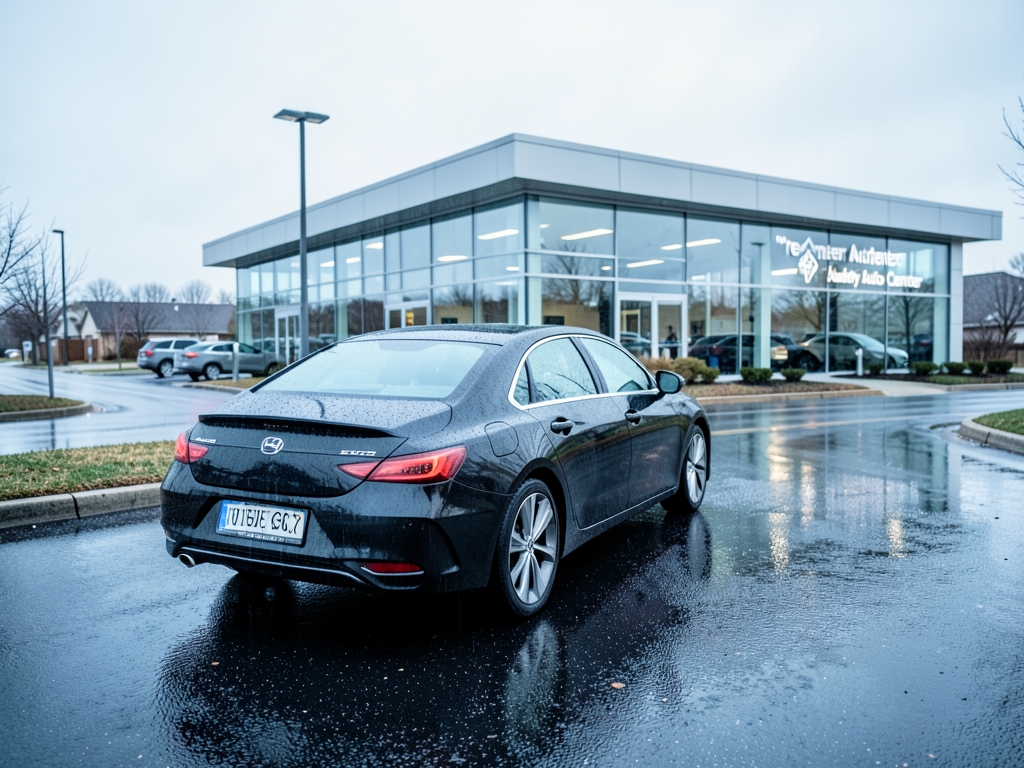
Toyota USA and NHTSA’s Office of Defects Investigation (ODI) are not interchangeable sources. In AI-driven design, I use a basic provenance rule: a plausible aggregate is not a fabrication specification; likewise, a rounded recall population is not a VIN-level record. According to the Article headline, a rounded aggregate figure is asserted, but no fetched excerpt identifies whether Toyota USA or NHTSA ODI publishes it, and no primary corroboration is supplied. Until that attribution is recovered, it is an unverified headline estimate, not an official affected count.
For NHTSA ODI, the publication record should quote verbatim the exact affected-VIN count, campaign ID, model-year range, and production-date interval. Place those fields beside the rounded figure so a reader can audit its scope and chronology, then attach the campaign-document source and a full retrieval date to each figure. The supplied excerpts provide none of those fields; I would not reconstruct them from model-year proximity, sales totals, or a search-result snippet. An overlapping production date would not establish applicability. The exact VIN campaign record remains the controlling test.
Toyota USA’s recall notice should source the named component, stated hazard, remedy, and customer-notification timing. Give the federal defect summary a separate label and quotation. If the documents use different component names, failure descriptions, remedies, or timing, show the discrepancy rather than blending them into a falsely authoritative summary. That comparison lets an owner see which record answers which question before using its VIN result.
The population ledger should also prevent category substitution. Affected VINs, cumulative Camry sales, registered Camrys, and NHTSA complaints count different things. None, without a defined linkage and matching coverage, supplies the population denominator needed to calculate a failure rate. The supplied record contains no qualifying denominator, so no rate should be inferred from placing those categories next to one another.
| Evidence class | Figure or fields to publish | Source and date status | Editorial decision |
|---|---|---|---|
| Article headline | Rounded headline population | Article headline; primary attribution and retrieval date absent | Label unverified, not official |
| NHTSA ODI campaign | Exact affected-VIN count, campaign ID, model-year range, and production-date interval | No campaign document supplied; ODI source and full retrieval date required | Quote verbatim after verification |
| Toyota USA notice | Component, hazard, remedy, and customer-notification timing | No notice supplied; Toyota source and full retrieval date required | Preserve wording and flag differences |
| Other populations | Affected VINs, cumulative sales, registered vehicles, and complaints | No qualifying population denominator supplied | Keep separate; calculate no failure rate |
| Publication gate | Official affected count and campaign ID | Primary support for the rounded figure is absent | Fail the check and replace the unsupported or stale title |
The next action is immediate and documentary: retrieve both primary records, record their full retrieval dates, and identify the campaign before retaining the headline. Verify the exact VIN against that identified campaign; its documented status—not the rounded population—controls the next step. If no primary campaign supports the rounded figure, fail the publication check and replace the title with the official affected count and campaign ID. An absent source proves neither completion nor exclusion.

Visual Guess vs. VIN Record
The decisive record is not the most plausible-looking Camry; it is the pair of records that separates campaign scope from service status. An official VIN result can establish whether this exact vehicle falls within a U.S. recall campaign, but it cannot by itself establish whether the named remedy is complete. Manufacturer or dealer history supplies the second part of the decision. I would rank the combined VIN-plus-completion record as the explicit winner: the scope record answers whether the campaign applies, and the completion record answers whether the specified remedy remains outstanding.
| Decision input | What it establishes | What it cannot establish | Verdict |
|---|---|---|---|
| Official VIN lookup | Whether this exact vehicle falls within a U.S. recall campaign | Whether a remedy was completed | Scope gate |
| Manufacturer or dealer history | The prescribed repair and documented completion | Whether the VIN belongs to the campaign without a scope check | Action gate |
| Model year and build date | Whether the vehicle falls near the production window | Exact equipment, part, or VIN inclusion | Loser |
| Exterior trim or visible configuration | A human-readable appearance guess | Hardware condition or safety status | Loser |
| Official VIN scope plus completion record | Applicability and the next service action | Nothing material once both records agree | Overall winner |
That division prevents two opposite errors. A visual match cannot promote a vehicle into a campaign, and a repair history cannot independently establish campaign scope. If the current official lookup identifies an applicable campaign for the exact VIN and no completion is documented, schedule the remedy named by Toyota. If the official result excludes the VIN, or manufacturer or dealer history documents completion of the specified remedy, there is no reason to wait for or repeat that repair. These are distinct endpoints, not interchangeable grades of uncertainty.
Treat a repair order as supporting evidence of completion, not proof of recall scope. It may indicate that work was requested or performed, but the VIN match must be established independently. I would verify scope from Toyota’s official VIN-specific record before using service history to decide the action. If a repair order and the VIN scope point in different directions, the order cannot enlarge the campaign’s scope; the exact vehicle record governs.
Model year, build date, and visible trim are useful only as search hints. A nearby production window may be consistent with a campaign, yet it cannot establish exact equipment, part, or VIN inclusion. Likewise, a recognizable exterior configuration is merely a human-readable appearance guess; it says nothing about hidden hardware condition or safety status. The myth to discard is that matching those cues proves a Camry is affected and unsafe. When model year, build date, or trim conflicts with the VIN result, reject the visual classification and follow the exact vehicle record.
The available source material describes no manufacturer remedy, owner notification, dealer process, service procedure, or repair-completion criterion. Accordingly, no corrective part should be inferred from the bodywork. The concrete action is narrow: check the current official VIN result, compare it with documented service history, schedule the applicable named remedy when completion is undocumented, and do not wait when the VIN is officially excluded or completion is documented.
What the Data Doesn't Tell You
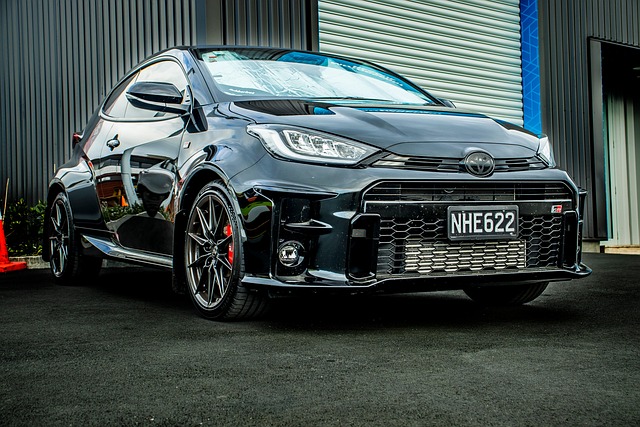
An official VIN result can be decisive without being a diagnosis. It answers a narrow administrative question; it does not estimate whether a defect will occur, how severe it might be, or whether the car is unsafe. That is a provenance problem, not a safety-classification problem: an exact label is useless if attached to the wrong vehicle. The rounded fleet headline cannot resolve an individual case, while the exact campaign and completion records can support the prescribed service decision.
The evidence limitation is that it records what Toyota and its dealers can substantiate at the time of the check, not every event in the vehicle’s history. A completion entry can lag physical work, an older response can miss a later update, and campaign language does not establish whether symptoms are present. Conversely, documented completion answers the campaign question without certifying that an unrelated concern is impossible. A model year, build month, nearby factory date, or visible configuration is contextual metadata only; none proves campaign applicability or safety.
Variance across cases is therefore expected. As a hypothetical Toyota example, one Camry VIN can be applicable with no completion documented, another can be officially excluded, and a third can have completion in dealer history. Their appearance and model-year labels may be nearly identical while their service decisions differ. An aggregate population count necessarily blurs those states. The useful frame is provenance—exact identity, current scope, and service history—not resemblance. Appearance-based clustering creates a precision the source record never contained.
The rule breaks at the boundary of evidence: the VIN was mistyped, the response does not correspond to the exact configuration, the status is unresolved, or official and dealer records conflict. “No completion documented” means the remedy is not substantiated in the available record; it is not a forensic claim that nobody ever performed the work. “Unclear” is not “open.” Preserve that distinction and obtain a fresh exact-VIN response plus dealer completion documentation. Do not substitute production-date proximity, owner impression, or the rounded headline. Conversely, absent symptoms do not negate an established exact-VIN campaign match.
| Record state | Supported inference | Unsupported inference | Action |
|---|---|---|---|
| Applicable; no documented completion | Toyota campaign applies and the remedy is unsubstantiated | A defect is occurring or the vehicle is unsafe | Schedule the specified Toyota remedy |
| Official exclusion | The VIN is outside the applicable campaign | Unrelated mechanical concerns are absent | No campaign-based reason to wait |
| Documented completion | The prescribed campaign work is substantiated | Every later concern is resolved | Do not repeat the campaign repair |
| Unclear or conflicting records | The current status is not established | The VIN is either open or excluded | Recheck the exact VIN and reconcile dealer documentation |
| Model or build-date proximity only | The vehicle resembles a cohort | The campaign applies or the vehicle is unsafe | Do not act on resemblance |
The methodological takeaway is simple: ambiguity should remain an unknown, not be converted into either “affected” or “excluded.”
Exposure, Not Failure
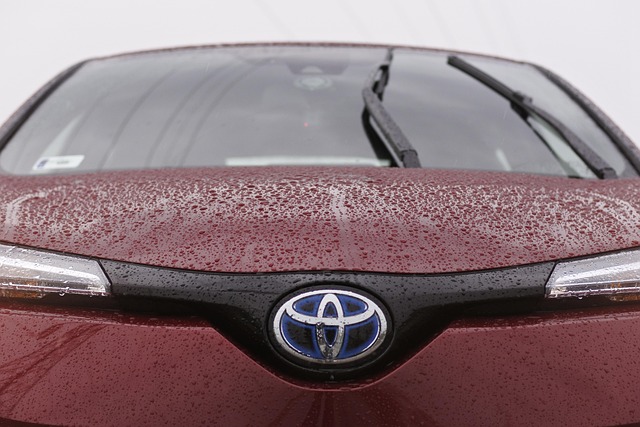
A campaign headcount answers a scope question, not a mechanical-outcome question. The total identifies vehicles classified as exposed by the applicable record; it does not count vehicles that actually failed. Without a defined mileage base, inspection results, onset dates, and a valid comparison group, it cannot yield a failure percentage, mileage-exposure curve, onset pattern, or causal estimate. “Affected” is therefore an eligibility label, not a diagnosis.
From a model-building perspective, VIN inclusion is a coarse categorical label. It can correlate with relevant hardware, but it does not encode manufacturing tolerances, part-supplier variation, prior repairs, collision damage, or maintenance history. Those omitted variables can leave two VINs inside the same labeled cohort in materially different component states. A model-year or nearby build-date match therefore cannot prove campaign applicability or an unsafe condition; the exact VIN campaign record governs, and even a match establishes exposure rather than failure.
Counter-evidence requires a two-sided error check. Zero incident reports at filing can coexist with latent risk because affected systems may not yet have surfaced defects or reached the reporting threshold. Conversely, complaints can coexist with a comparatively low rate because complainants are not a random sample and the number of vehicles actually exposed at comparable mileage is missing. Neither raw absence nor raw complaint volume substitutes for a valid exposure denominator.
A no-match result is a scoped negative. It answers only whether the queried VIN falls within that specific Toyota campaign; it does not adjudicate a different campaign, an unrelated warning indication, a symptom, or a broader safety concern. The warranted conclusion is “this campaign does not call for the specified repair,” not “this Camry has no safety issue.” Any separate concern needs its own evidence and diagnostic path.
Completion is time-indexed, not permanently fixed. Dealer work can occur before a VIN-history update, transaction reporting can lag the service event, and an amended recall notice can change the applicable remedy or documentation. The source and its timestamp should accompany every status so later official changes remain detectable. A timestamp alone, however, does not justify negating documented completion or repeating an already completed repair.
Campaign administration also cannot prove universal repair effectiveness. The cited data do not establish that every prescribed repair eliminated every failure mode, or that one model cohort predicts a later redesigned Camry. Those conclusions require separate post-repair outcomes, defect-specific follow-up, and analysis of the later vehicle cohort. Administrative scope is not a universal causal test.
| Observed evidence | Valid inference | Invalid inference |
|---|---|---|
| Affected-population total | Defines campaign exposure | A confirmed-failure count or rate |
| VIN campaign inclusion | Identifies administrative scope | Identical physical condition for every vehicle |
| No reports at filing | Describes that reporting snapshot | Proves zero latent risk |
| Complaint volume | Identifies investigation signals | Establishes incidence without a denominator |
| No campaign match | Resolves only the queried campaign | Clears unrelated safety concerns |
| Dated completion record | Establishes status when recorded | Permanent closure or grounds for automatic repetition |
| Campaign or repair data | Supports the specified campaign action | Proves universal efficacy or later-cohort prediction |
Verify the exact VIN now. If the official campaign applies and completion is not documented, schedule the prescribed Toyota remedy; if official exclusion or completion is documented, do not wait for or repeat that campaign’s repair.
One Masked VIN, Six Timestamped Fields
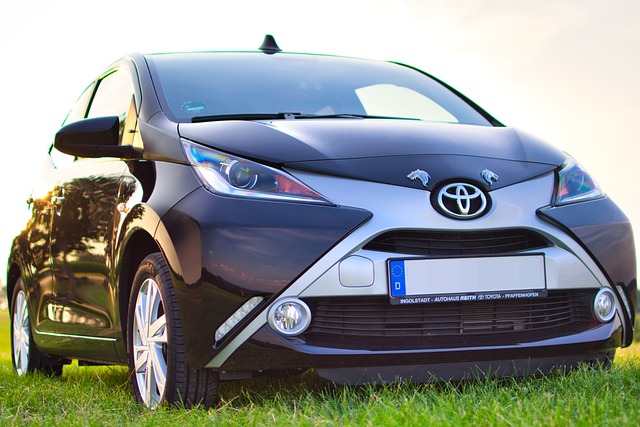
The auditable unit is one permissioned VIN tied to six dated records, not a generic Camry description. I would select a single VIN from my own vehicle with documented permission or from a dealer-documented test vehicle. The complete VIN would remain in access-controlled evidence; the published version would mask unnecessary characters while preserving enough structure to reconcile every retained field. Over-masking breaks verification; under-masking exposes personal information.
Two decoded characters provide useful consistency checks: the model-year character at position 10 and the plant character at position 11. I would compare both with the applicable Toyota campaign’s published production window and record any mismatch. That comparison can expose an incompatible evidence packet, but neither those characters nor the vehicle’s appearance establishes campaign applicability. Only the exact VIN’s official campaign result does.
| Timestamped field | Evidence to preserve | Available source state |
|---|---|---|
| Provenance and mask | Consent date, vehicle provenance, access-controlled full VIN, and published masked VIN | No individual VIN or permission record was supplied. |
| Decoded controls | Decoder source, decoding date, position 10 model-year character, position 11 plant character, and production-window comparison | No characters or campaign production window are available for comparison. |
| Federal applicability | NHTSA ODI lookup date, time, time zone, every returned campaign ID, and the exact affected or not-affected response | No VIN-specific response was supplied; a generic no-results webpage cannot replace it. |
| Toyota remedy and service history | Manufacturer remedy name, campaign-document date, and a dealer or manufacturer record for the same VIN and campaign, including completion date when available | Neither a named remedy nor a completion record is available. |
| Outstanding-remedy reconciliation | Dated calculation: listed applicable campaign IDs minus documented matching completions, with each source’s status wording retained | The count is not computable. “Unknown” cannot be recorded as zero or treated as completion. |
| Disposition and source lines | Decision date, actual result, quoted applicability and completion lines, and the resulting repair action | No truthful case disposition or source-line quotation can yet be produced. |
The reconciliation must count campaign IDs, not headlines, symptoms, or service visits. A completion can be subtracted only when its record identifies the same VIN and the corresponding campaign or named remedy. If Toyota’s record says completion is not documented, that campaign remains outstanding for action even though the historical status is not itself a numeric fact.
The actual conclusion is therefore disciplined: the supplied record cannot support a worked-case count or repair dec
Frequently Asked Questions
Can a 2026 model-year code, build month, or factory date prove that a Camry’s VIN is included in a recall campaign?
No; only the exact VIN record establishes campaign inclusion.
What can the North American check digit at VIN position 9 confirm?
It can expose a transcription or encoding error, but it does not establish recall status.
Which two primary records must be joined to verify a Camry VIN?
Toyota’s official campaign material defines the defect and remedy, while NHTSA’s federal campaign file supplies the affected VIN population or ranges.
What should an owner do if the VIN is listed as open for a matched campaign?
Schedule the prescribed Toyota remedy.
What does a VIN-specific “not listed” result mean?
The VIN is outside that specific campaign’s remedy population and is not assigned its remedy.
Does a missing campaign announcement or remedy-release date create a waiting period before checking?
No; missing dates do not permit an inferred waiting period, so the live Toyota and NHTSA records should be checked against the VIN now.
Quick answers
| What is the smallest defensible unit for determining whether an individual Camry is affected? | For an individual vehicle, the smallest defensible unit is one VIN, not an aggregate production estimate. |
| Does a 17-digit VIN by itself establish a diagnosis or determine that the vehicle is affected? | A 17-digit VIN by itself is not a diagnosis, and the supplied material supports neither a diagnosis nor a determination that any particular 17-digit VIN is affected. |
| How is the recall lookup characterized? | The recall lookup is a two-source join, not a keyword search. |
| What does a “Not listed” exact VIN lookup state mean? | The VIN is outside this specific campaign’s remedy population. |
| What should be checked instead of inferring a waiting period from missing dates? | Check the live Toyota and NHTSA records against the VIN now. |
Also worth reading: Engineering Deep Dive Toyota's Evolution of Gasketless Water Pump Design - From 2004 Camry to Modern Performance Cars: Engineering Deep Dive Toyota's Evolution · Track Test 2024 Honda Accord vs Toyota Camry - The Ultimate Performance Analysis of Japan's Midsize Rivals: Track Test 2024 Honda Accord · Critical Analysis Toyota Camry's 2007-2009 Models - A Deep Dive into Transmission and Engine Failures That Shaped Modern Design Standards: Critical Analysis Toyota Camry's 2007-2009