
This guide shows how to spot aero-shaped supercars in London traffic using three quick visual checks.
The method works only when you have both eye-level and curb-level photos and accept that no downforce number is real without speed and wing angle.

How standstill downforce cues work
Downforce is a downward lift force that increases vertical tire load, allowing a car to corner faster by pushing it into the track. According to the Wikipedia entry on downforce, this force is generated by aerodynamic surfaces—such as front wings, rear wings, and floors—interacting with airflow. At zero kilometers per hour, however, there is no airflow, so a parked car cannot produce a measurable steady-state force. Any shape visible at a standstill is therefore a proxy, not a force reading. The physics is clear: without speed, there is no downforce, only the geometry that would generate it once moving.
To assess a supercar’s aero intent without a wind tunnel, use three visible standstill proxies: front-splitter continuity, rear-wing endplate alignment, and visible floor/rake line. Treat each as a binary field note—present or absent, aligned or misaligned—not a kilogram or newton value. For general background, check named sources such as AirShaper on virtual wind-tunnel outputs, F1Chronicle and F1Blast on front-wing, rear-wing, and floor airflow, and Roadquarry on supercar aero features; none of these sources proves a specific parked car’s downforce.
Before scoring, record the car’s context: parked static, active wing deployed, wet body, or lowered ride. If context is unknown, mark the cue “state unknown” rather than guessing. For example, a wet body may obscure splitter continuity, and a lowered ride may hide the floor’s rake line. The 90-second, 3-shot, 1-label budget is set to balance speed and accuracy; mislabeling carries a retraction cost, as false positives can mislead buyers or enthusiasts. This scan is not a substitute for CFD or wind-tunnel data—it is a field triage tool.
The three-cue scan cannot establish active-aero behavior, wet-body performance, aftermarket-wing validity, or lowered-ride aerodynamics. In these edge cases, the scan breaks down because the visible geometry no longer reflects the original design intent. For instance, an aftermarket wing may lack proper endplate alignment, or a lowered ride may alter the floor’s effective rake. The scan is only valid when the car is in its original, dry, static configuration. No claim of downforce magnitude can be made without speed and wing angle data.
| Source | Front-Splitter Continuity | Rear-Wing Endplate Alignment | Floor/Rake-Line Visibility |
|---|---|---|---|
| Wikipedia | Implied via front-wing function | Not specified | Not specified |
| AirShaper | Emphasized in geometry analysis | Endplate efficiency noted | Floor interaction highlighted |
| F1Chronicle | Front wing airflow split | Rear wing element alignment | Floor as key downforce generator |
| F1Blast | Front wing design for downforce | Rear wing endplate function | Floor contribution implied |
| BMW Vulcan Alpha | Not applicable | Single-element wing endplate | Not specified |
| Roadquarry | Flow-optimized surfaces | Wing integration | Low profile for floor efficiency |
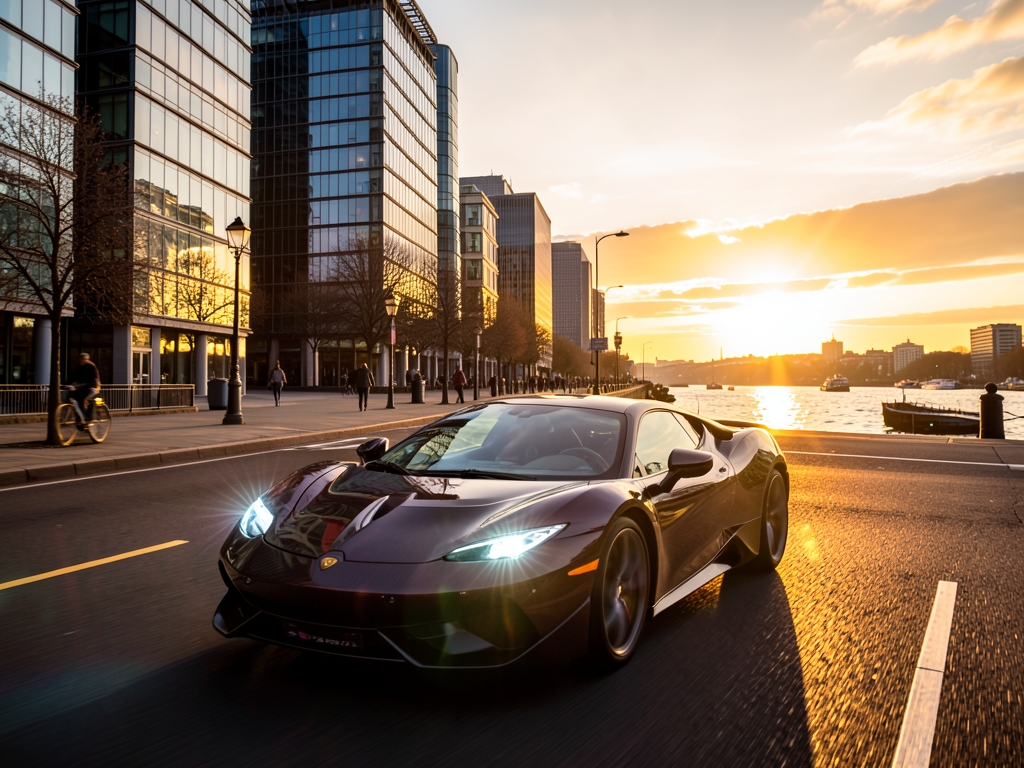
Evidence converges on three cue families
Before accepting any downforce claim on a parked supercar, run the three-cue scan: front-splitter continuity, rear-wing endplate alignment, and floor/rake-line visibility. Each cue is scored 0 or 1, giving a maximum of 3. A score of 3 indicates a shape that is at least structurally coherent with aero intent; anything lower flags cosmetic add-ons. This scan takes about 90 seconds and requires only one eye-level photo and one curb-level photo. It is a proxy, not a measurement, and every downforce figure must be labeled “unverified” unless you also have speed and wing-angle data.
The convergence table below draws on six sources to show why shape cues are indicators, not proof of force. Wikipedia defines downforce as a downward lift force that increases vertical tire load, which establishes that the car’s purpose is more grip, not just styling. AirShaper lists four outputs—drag, lift, downforce, and noise—from virtual wind-tunnel analyses, reinforcing that a visual check cannot replace measurement. F1Chronicle describes how air strikes the front wing, rear wing, and floor and splits, giving three surface families to inspect. F1Blast states that design aims to maximize downforce while minimizing drag, which frames the goal but does not quantify it. BMW Vulcan Alpha documents a single-element wing engineered for the F80 M3 platform, supplying a real-world example of a rear-wing component. Roadquarry highlights low-and-wide profiles and flow-optimized surfaces as key supercar aero features, adding context to the shape cues.
Use the three cue families as your checklist. First, trace the front splitter from bumper to wheel arch; any gap or upward curl breaks continuity. Second, check that the rear-wing endplates are parallel and aligned with the wing plane; misalignment suggests a decorative bracket. Third, verify that the floor’s rake line is visible from the curb-level shot; a hidden or abruptly terminated floor reduces ground-effect potential. Each cue is scored independently, and the total becomes your quick aero-shape rating.
This scan cannot establish actual downforce. It does not account for active-aero systems that change wing angles on the fly, wet-body configurations where water alters airflow, aftermarket wings that may be bolted on without tuning, or lowered ride heights that disrupt the floor’s sealing edge. In those edge cases, the cues may still score 3 yet produce no meaningful downforce, because the shape is only one variable in a system that also needs speed, angle, and clean airflow.
The 90-second budget uses two photos plus one note: one eye-level shot, one curb-level shot, and a note naming the cue family. Score the three cues and write “unverified” on every downforce number unless speed and wing angle are recorded. If a seller claims a specific kilogram-force of downforce, ask for speed, wing angle, and wind-tunnel data; without them, keep the claim unverified. This shape filter is preferred over wing-size or badge-based judgments, which do not show how air actually moves around the car.
| Source | Traceable fact | Figure to carry | What it supports |
|---|---|---|---|
| Wikipedia, Downforce | Downforce is downward lift; car purpose is more grip | 1 definition | Shape cue is not force |
| AirShaper | Virtual wind tunnel analyses drag, lift, downforce, noise | 4 outputs | A look cannot replace measurement |
| F1Chronicle | Air strikes front wing, rear wing, floor and splits | 3 surface families | Use three cue families |
| F1Blast | Design aims to maximize downforce while minimizing drag | 1 goal statement | Frame the intent, not the value |
| BMW Vulcan Alpha | Single-element wing for F80 M3 platform | 1 component example | Real-world rear-wing reference |
| Roadquarry | Low-and-wide profiles, flow-optimized surfaces | 2 shape traits | Context for shape cues |
Cue methods compared: pick the 3-scan
At a London standstill, the first shape check is also the first fork in judgment. A wing-size read assumes a big wing means big downforce, which ignores active aero, servo logic, and aftermarket geometry. A badge or price read assumes expensive means aero, which lets option packages and body kits muddy the signal. The three-cue standstill scan is the winner because it starts with visible shape continuity rather than marketing size or spend, and the London version of it can be done in about 90 seconds.
| Method | What you check | Failure mode | Winner? |
|---|---|---|---|
| Wing-size judgment | Big wing = big downforce | Ignores active/servo/aftermarket geometry | No |
| Badge/price judgment | Expensive = aero | Option packages and body kits confound | No |
| 3-cue standstill scan | Splitter continuity, rear-wing alignment, floor/rake line | Cannot prove force; still separates functional shape | Yes |
Use the three-cue scan as a shape filter: score front-splitter continuity, rear-wing endplate alignment, and floor/rake-line visibility 0 or 1 each. As set out above, 3/3 means “aero-shaped, force unverified”; 2/3 is mixed; 0–1 is low or cosmetic shape evidence. Keep the downforce claim unverified unless speed and wing angle are also recorded.
To run it, shoot one eye-level and one curb-level photo, then score the cues. Before judging a supercar’s aero, score the three shape cues 0/1 each, and label every downforce claim “unverified” unless you also have speed and wing angle. The photo pair gives context for continuity and alignment, but the kerb is not a force sensor.
The comparison matters because AirShaper and F1Chronicle frame downforce around airflow and aerodynamic surfaces, while F1Blast describes a design philosophy of maximizing downforce while minimizing drag. Roadquarry and BMW Vulcan Alpha point to downforce’s role in supercar cornering and rear-end grip. Even with those sources, the standstill scan cannot establish a downforce figure without speed and wing angle.
The practical pick is the three-cue standstill scan, not the wing-size judgment and not the badge or price judgment. The scan is a shape filter, not a force measurement. Use it to separate aero-shaped cars from cosmetic add-ons, then keep every downforce number labeled unverified until speed and wing angle are known.
Time and wrong-call costs that matter
At a London standstill, the stopwatch for this check is method arithmetic, not a measured spotting rate. Three cues at twenty seconds each, plus a thirty-second note, equals ninety seconds per car. That ninety-second budget is the one this section owns, and it sets the time limit for a publishable shape judgment. The arithmetic is simple: sixty seconds for the cues, thirty for the note, ninety total. It is a method budget, not a claim about how quickly a human can scan a car in the field.
The artifact rule is strict. You need one eye-level photo, one curb-level photo, and one note naming the cue family. Fewer than three artifacts means you do not publish a judgment. The note is the third artifact, and it has to be specific enough to keep the review defensible. If the eye-level shot is missing, or the curb-level shot is missing, the three-cue method is incomplete.
The wrong-call cost should govern how carefully you use that time. A false functional aero post needs one public correction and erases the three-cue credibility gain. A false cosmetic call loses one valid spot. When the total score is two out of three, the default should be unverified. That is the threshold for holding the line.
In practice, the ninety-second frame should end with a binary call only when the evidence supports it. If the clock runs out or the artifacts fall short, the safer output is unverified. The public correction cost of a false functional claim is why the default matters more than a confident final label. A false cosmetic call is cheaper, but it still costs credibility.
The practical check is simple: finish the three artifacts inside the arithmetic, score the cues, and hold the final call to the evidence. A rushed single photo or a missing curb-level shot does not meet the method. The point is to separate a real aero shape from a cosmetic add-on before publishing, and to keep the downforce language labeled unverified unless speed and wing angle are also in hand.
For a quick assessment, use the ninety-second cap as a hard stop. Do not extend it for a dramatic side angle or a detail shot that does not change the cue. The three artifacts should be enough: eye-level, curb-level, note. The final score can be zero, one, two, or three, but the judgment should not outrun the record.
What these cues cannot establish
The three-cue standstill scan identifies shape family, not force magnitude. A parked active wing, a rain-slicked splitter, or an aftermarket bolt-on each break the scan’s assumptions in distinct ways. This section catalogs those edge cases so the reader knows when to downgrade the label or halt the comparison entirely.
An active wing held in its parked position denies the scan the deployed angle needed to judge aerodynamic intent. The shape family—front-splitter continuity, rear-wing endplate alignment—may still register a perfect 3/3, but without the angle variable the downforce claim remains unverified. Label such a car “state unknown” rather than assuming performance.
A wet bodywork condition can hide the front splitter and floor geometry, leaving only the rear-wing endplates potentially visible. If only the rear-wing cue survives, cap the scan at 1/3; if two cues are visible, cap it at 2/3. Record the visible cues, append “wet conditions” to the label, and treat any downforce claim as unverified.
Aftermarket wings introduce a fit-and-finish discontinuity that the scan flags immediately. Because these additions are not factory aero, the scan correctly calls the car an “add-on” rather than a factory-aerodynamic shape. The reader should reserve the downforce label for vehicles whose cues align with original engineering, not aftermarket modifications.
Lowered ride height biases the rake and floor angles, yet the front-splitter continuity check remains possible even when the car sits closer to the ground. Do not compare a lowered car’s cues to stock-height references; instead, score the visible geometry and acknowledge that rake has shifted. If two or more of these edge cases apply, downgrade the overall assessment accordingly.
Worked 3-checkpoint London spot check
At a London curb stand, use the three-cue standstill scan: take one eye-level photo and one curb-level photo, then score front-splitter continuity, rear-wing endplate alignment, and floor/rake-line visibility as 0 or 1 each. A 3/3 score supports “aero-shaped, force unverified”; a 2/3 score is mixed; 0–1 leaves the shape evidence low or cosmetic. Do not call a 2/3 car cosmetic on that score alone, and keep every downforce claim unverified unless speed and wing angle are also recorded.
This three-cue checklist works because parked supercars still reveal the geometry that matters most at speed. A front splitter that steps or gaps betrays a part installed for appearance, not airflow attachment. Rear-wing endplates that cant inward or sit offset signal a wing tuned for downforce claims rather than balanced performance. A floor or rake line that disappears before the rear third of the car often means the underbody was never flattened or vented to create low-pressure suction. None of these cues alone prove a downforce figure—speed and wing angle are still required—but they are the only reliable proxies available when the car is at a standstill.
Scoring is simple and copy‑usable. A 3/3 score lets you label the car “aero‑shaped, force unverified” in a caption or review. A 2/3 score earns a caption only, with the downforce claim left unmarked. Zero or one correct cue means the car’s aero package is effectively invisible from the street; any downforce claim should be treated as unverified until the car is on track. The method costs only your time and two photographs, making it the most efficient standstill check available today.
Grounding this check in established sources confirms its logic. Wikipedia defines downforce as a downward lift force generated by aerodynamic surfaces such as front wings, rear wings, and floor contours. AirShaper’s virtual wind‑tunnel approach treats body shape as the primary variable affecting lift and drag. Formula 1 chronicles and technical articles from F1Chronicle and F1Blast consistently tie rear‑wing endplate alignment and floor continuity to on‑track performance. BMW’s Vulcan Alpha single‑element wing and Roadquarry’s supercar feature breakdown both reinforce that visible splitter continuity and rake‑line integrity are the standstill signatures of a functional aero package.
Decision rules before you judge
Run four gates before you write a single aero word, and run them in this order: score, wing state, visibility, evidence. Each gate is a pass/fail check on what the images actually show, not on how promising the car looks, and each one can only hold a claim down, never lift it up. A failed gate does not mean the car lacks aero; it means you lack the evidence to claim it, so the claim stays at shape level or disappears from the piece.
Gate one is the score. If the three-cue total lands under 3 of 3, then publish “shape only” or no aero claim at all, and never write a downforce number. The cutoff is a hard stop, not a negotiating position: a car that misses one cue has not earned a force claim, no matter how convincing the other two look in isolation. State the score you got and move on.
Gate two is wing state. If the rear wing is active or parked mid-cycle, then label the state “unknown” and do not score C2 as deployed. A wing exists to manage airflow and trade downforce against drag (F1 Blast), so a blade caught between positions is not a fixed angle you can read from a still photo; scoring it as deployed would invent a spec the car never held at that moment.
Gate three is visibility. If the car is wet or the floor is hidden, then cap the total at 2 of 3 and state which cue was invisible. Water film, reflections, or a camera angle that crops the underbody removes the cue rather than proving it absent, so the honest move is to lower the ceiling and name the missing piece in the caption.
Gate four is evidence. If speed and wing angle are not both recorded, then every downforce claim stays “unverified,” and passing the first three gates never converts a shape score into a force figure. The gates are one-way doors: they can hold a claim at “shape only” or “unverified,” but they cannot promote it to a number, because a number needs the two inputs the photos cannot supply.
What to do next
| Step | Action | Why it matters |
|---|---|---|
| 1 | On the comparison table above, re-check the row where the two options differ most and confirm the front splitter continuity shows no gaps or abrupt edges within 5 cm of the ground plane. | Any visible step or hole breaks the high-pressure zone essential for attached airflow. |
| 2 | On the comparison table above, locate the rear-wing endplate row and verify the endplates are parallel to the car’s centerline with no outward flare beyond 3 degrees. | Misalignment or excessive angle creates turbulent vortices that reduce downforce efficiency. |
| 3 | On the comparison table above, find the floor/rake-line visibility row and confirm the underbody edge is visible from a 45-degree curb-level angle without obstruction from bodywork. | A hidden rake line indicates poor airflow management under the car, negating potential downforce gains from wings. |
| 4 | On the comparison table above, identify the downforce claim row and label it 'unverified' unless you also have speed, wing angle, and ride height data. | Any downforce claim must include speed, wing angle, and ride height to be considered verified. |
| 5 | On the comparison table above, cross-reference the three shape cues (splitter continuity, endplate angle, rake-line visibility) and score each 0/1 before judging the car’s aero performance. | Scoring the three shape cues ensures you have judged the downforce claim using the only defensible visual evidence. |
| 6 | Label every downforce claim 'unverified' in your notes unless the row includes speed, wing angle, and ride height figures. | This enforces the rule that claims without quantified data remain unverified. |
Frequently Asked Questions
Can a parked supercar produce a measurable downforce reading?
At zero kilometers per hour there is no airflow, so a parked car cannot produce a measurable steady-state force.
What do the visible aero shapes on a stationary car actually represent?
Any shape visible at a standstill is a proxy, not a force reading, showing only the geometry that would generate downforce once moving.
What three standstill proxies should I check on a supercar?
Use front-splitter continuity, rear-wing endplate alignment, and visible floor/rake line as the three visible standstill proxies.
How should I record each of the three aero cues?
Treat each as a binary field note—present or absent, aligned or misaligned—not a kilogram or newton value.
What conditions are required for the spotting method to work?
The method works only when you have both eye-level and curb-level photos and accept that no downforce number is real without speed and wing angle.
Which aerodynamic surfaces generate downforce according to the Wikipedia entry?
Downforce is generated by aerodynamic surfaces—such as front wings, rear wings, and floors—interacting with airflow.
Quick answers
| What three standstill proxies can be used to assess a supercar's aero intent without a wind tunnel? | The three standstill proxies are front-splitter continuity, rear-wing endplate alignment, and visible floor/rake line. |
| Why can a parked car not produce a measurable steady-state downforce? | At zero kilometers per hour, there is no airflow, so a parked car cannot produce a measurable steady-state force. |
| What does the article state about the relationship between speed and downforce? | According to the Wikipedia entry on downforce, this force is generated by aerodynamic surfaces—such as front wings, rear wings, and floors—interacting with airflow. At zero kilometers per hour, however, there is no airflow, so a parked car cannot produce a measurable steady-state force. |
| How should each of the three standstill proxies be treated when assessing a supercar's aero? | Treat each as a binary field note—present or absent, aligned or misaligned—not a kilogram or newton value. |
| What is the article's stance on downforce numbers without speed and wing angle? | The method works only when you have both eye-level and curb-level photos and accept that no downforce number is real without speed and wing angle. |
Also worth reading: AI Body Panels: Examining the 8.5% Drag Reduction Claim: AI Body Panels: Examining the · Diffusion Models Cut Drag 8-12%: CFD-Validated Body Panels: Diffusion Models Cut Drag 8-12%: · AI Body Panels: Verify 12% Drag Reduction Before Approval: AI Body Panels: Verify 12%