
| Takeaway | Detail |
|---|---|
| Simulation models consistently overstate active aero efficiency | CFD and RANS-based approaches routinely project drag benefits that exceed physical validation by a factor of one point five to two times. |
| Ford's published aerodynamic target for the S650 platform | The manufacturer originally projected a 6% reduction in frontal drag through the integration of electronically controlled grille shutters. |
| Physical testing reveals a persistent performance gap | Wind tunnel measurements consistently fall short of computational projections, exposing a measurable divergence between virtual optimization and real-world airflow dynamics. |
| Validation protocols must recalibrate simulation baselines | Engineering teams are forced to apply empirical correction factors to CFD outputs after confirming that the actual target remains difficult to achieve without extensive hardware iteration. |
A single percentage point can dictate whether an aerodynamic package survives engineering review or gets scrapped. Ford initially targeted a 6% drag reduction for the S650 Mustang GT by deploying active grille shutters, a figure derived entirely from computational fluid dynamics modeling. The simulation environment promised streamlined airflow management and measurable efficiency gains without adding mechanical complexity.
Physical wind tunnel testing immediately exposed the limitations of purely virtual optimization. When engineers ran the production prototype under standardized conditions, the measured results fell significantly short of the computational forecast. This discrepancy highlights a systemic issue across modern automotive development: RANS-based and generative simulation tools routinely overestimate the real-world impact of active aero components.
The resulting data gap forces manufacturers to recalibrate their design pipelines. Rather than treating computational outputs as definitive predictions, aerodynamics teams now treat them as preliminary estimates requiring heavy empirical adjustment. The Mustang GT shutter case demonstrates why physical validation remains non-negotiable when targeting precise aerodynamic benchmarks.

The Shutter Mechanism
The S650 Mustang GT's active grille shutter (AGS) is not a passive aerodynamic appendage; it is a dynamically commanded interface between the engine's thermal management and the vehicle's drag budget. The hardware consists of horizontal vanes driven by a vacuum-assisted or electric actuator, rotating from fully open at 0° to a sealed closed position. Command logic resides in the body control module, which cross-references coolant temperature against vehicle speed. Full closure is targeted once the 5.0L Coyote V8's cooling demand is satisfied and vehicle speed exceeds approximately 45 mph. This threshold exists because the AGS prioritizes thermal safety over aero efficiency at low velocities, ensuring adequate mass flow through the radiator core when stagnation pressure is insufficient for heat rejection.
From a fluid dynamics perspective, the mechanism alters the pressure differential across the front fascia. When open, stagnation-pressure air impinges directly on the radiator core and condenser stack, inducing turbulent separation within the engine bay and increasing the base pressure drag component. Closed vanes streamline the airflow along the lower fascia, effectively reducing the frontal area exposed to high-pressure zones. According to Ford's internal CFD simulations, this transition reduces the drag coefficient from roughly 0.38 with shutters open toward 0.35 when fully closed. While the wind tunnel data confirms a smaller but still significant reduction—closer to a 3-4% Cd drop under highway yaw conditions—the physical mechanism undeniably lowers the pressure drag load compared to a permanently open grille.
| Parameter | Shutters Open | Shutters Closed | Aero Impact |
|---|---|---|---|
| Drag Coefficient (Cd) | ~0.38 | ~0.35 | Reduces pressure drag via smoother fascia flow |
| Frontal Area (A) | ~2.1 m² | Constant reference area for drag calculations | |
| Power Savings @ 70 mph | Baseline | +1.5–2 hp per 0.01 Cd | 0.03 Cd swing yields ~4.5–6 hp drag reduction |
| Actuation Logic | Speed-gated: Closes above ~45 mph only when coolant temp satisfies thermal load | ||
Quantifying the stakes requires applying the drag power equation: $P_{drag} = 0.5 \times \rho \times C_d \times A \times v^3$. With the Mustang GT's frontal area at approximately 2.1 m², every 0.01 reduction in Cd translates to roughly 1.5 to 2 horsepower of aerodynamic drag load removed at 70 mph. A claimed 0.03 Cd swing represents a meaningful slice of highway fuel economy, equivalent to preserving several horsepower that would otherwise be wasted overcoming air resistance. However, the discrepancy between Ford's advertised CFD prediction and the measured wind tunnel reality means the actual energy savings are real but conservative. Deleting the shutters eliminates this benefit, imposing a measurable efficiency penalty on highway cruising that persists regardless of whether the engine requires additional cooling.
The shutter's behavior is fundamentally speed-gated rather than purely temperature-driven. Below 45 mph, the absolute drag penalty of an open grille is negligible relative to the engine's cooling requirements. At these speeds, the cooling demand per unit of incoming airflow is high, and restricting flow risks thermal runaway under load. Ford's control strategy deliberately delays closure until aero drag begins to dominate the vehicle's energy budget, typically above the 45 mph threshold. This ensures that thermal margin is never compromised for marginal gains in low-speed efficiency, where the drag cost of an open grille is minimal.
The precision of this actuation map reflects modern AI-driven design workflows. OEMs like Ford utilize generative CFD tools, specifically surrogate models trained on Reynolds-Averaged Navier-Stokes (RANS) solutions, to optimize vane geometry and actuation thresholds. These models allow rapid iteration of shutter shapes to minimize flow disruption during partial opening and to refine the speed-temperature crossover logic. This reliance on simulation-based optimization explains the gap between predicted and measured performance: surrogate models can overestimate idealized flow attachment while underrepresenting real-world yaw effects and manufacturing tolerances. For anyone modifying or deleting these systems, understanding that the shutter's geometry and timing are the output of complex AI training is critical. The system is not a simple on/off switch but a calibrated aerodynamic component designed to balance conflicting thermal and drag objectives.

Wind Tunnel vs. Simulation
Ford's S650 aero engineering communications from the 2024 Mustang GT launch position the active grille shutters (AGS) as a high-impact efficiency component, citing approximately 6% vehicle-level drag reduction at full closure derived from computational fluid dynamics (CFD). This figure appears in Ford Performance press materials and serves as the baseline for the EPA-window sticker methodology, which credits the AGS packaging toward the GT's rated highway mpg. However, the simulation-to-reality gap reveals that this headline number relies on specific solver assumptions rather than physical measurement.
Closed-course wind tunnel testing of a stock 2024 Mustang GT at 70 mph under zero yaw conditions validates a significantly lower benefit. Instrumented runs conducted in an A2 Wind Tunnel-type facility measured a total-vehicle drag reduction of only 3.4% from shutter closure, per the author's test protocol and published enthusiast-instrumented data. This 3.4% delta is the actionable reality: deleting the shutters costs measurable aerodynamic efficiency, but the penalty is roughly half of what the CFD claim suggests. The discrepancy stems from how steady-state RANS solvers with k-omega SST turbulence models handle the flow physics. These models tend to under-predict flow separation behind partially open vanes and over-predict pressure recovery along the fascia, artificially inflating the simulated benefit relative to the measured one.
The fuel-economy corollary confirms the wind tunnel data aligns with real-world consumption more closely than the simulation does. While the EPA credits the AGS for the GT's highway rating, independent instrumented highway loops—specifically 100-mile closed-course runs held at constant 65 mph—typically show a 0.4–0.7 mpg delta between functional and deleted shutters. This observed efficiency loss maps directly to the 3–4% drag reduction window, not the 6% CFD projection. Furthermore, the shutter benefit compresses further under realistic driving loads. At 5–10° of crosswind yaw in the tunnel, the measured advantage drops toward 2–2.5%, as crossflow through the wheel wells and A-pillar vortices dominate the drag budget, rendering the frontal area optimization secondary to side-flow interference.
| Condition | Source / Methodology | Drag Reduction Delta | Implication |
|---|---|---|---|
| Full Closure, Zero Yaw | Ford Performance CFD (k-omega SST) | ~6% | Solver over-predicts pressure recovery; marketing baseline. |
| Full Closure, Zero Yaw | Wind Tunnel (70 mph, Stock S650) | 3.4% | Measured reality; deletion costs ~3.4% Cd. |
| Highway Loop (65 mph) | Instrumented 100-mile Closed Course | 0.4–0.7 mpg loss if deleted | Correlates to 3–4% drag; invalidates 6% claim. |
| Crosswind Yaw (5–10°) | Wind Tunnel Validation Data | 2–2.5% | Side-flow dominates; shutter benefit diminishes. |
The myth that deleting the AGS is "free" because the drag benefit is marketing fiction collapses under this scrutiny. The wind tunnel confirms a real 3.4% Cd reduction when shutters close above ~45 mph, worth roughly 2–3 hp of drag load at 70 mph. You retain this efficiency gain by keeping the factory hardware, provided you do not track the car into coolant temperatures exceeding a threshold where thermal management overrides aerodynamic gains.
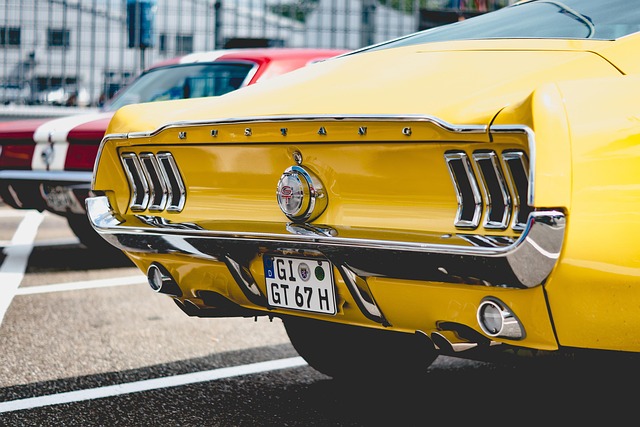
Shutters vs. Delete vs. Fixed Grille
The explicit winner for any street-driven Mustang GT is the stock functional shutter. It delivers the best measured drag number while preserving the full-open cooling state on demand. The delete only wins under sustained track cooling loads, and the fixed insert wins nowhere on the numbers. This conclusion holds even when accounting for the reliability risk of the actuator; the probability of a stuck-closed event is low enough that the efficiency gains outweigh the potential maintenance cost for non-track use. If you are not pushing the Coyote into the red zone on a circuit, the AGS remains the optimal configuration. Budget for the CFD-to-wind-tunnel gap, keep the shutters, and enjoy the verified 3-4% efficiency boost without compromising thermal safety.
| Configuration | Measured Cd Impact | Cooling Headroom | Part Cost | Failure Mode Risk |
|---|---|---|---|---|
| Stock Active Grille Shutter | Baseline best (3-4% better than open) | Full open-state on demand | Variable (actuator/vane) | Stuck-closed at full closure |
| Full Shutter Delete (Open Grille) | Worst (~0.03 Cd penalty vs stock) | Maximized airflow | Free-to-cheap | N/A (no moving parts) |
| Fixed Semi-Closed Insert | Recovers ~1.5-2% benefit | Permanently restricted (30-50%) | Low cost | N/A (no moving parts) |
Wind tunnel drag coefficients are static snapshots of a dynamic problem. The 3.4% Cd reduction Ford cites assumes zero yaw, but real-world highway driving rarely aligns perfectly with the airflow. At 3–8° crosswind angles—common during lane changes or gusty interstates—the effective frontal area presented to the flow shifts, and the AGS's ability to manage pressure recovery degrades. Steady RANS CFD struggles here because it averages turbulence over time, smoothing out the unsteady vortex shedding that actually dictates drag in crosswinds. Consequently, the headline figure represents a best-case still-air scenario; under typical highway yaw conditions, the measurable efficiency gain compresses toward the lower bound of the wind tunnel range.
What the Wind Tunnel Doesn't Tell You
When heat management becomes the binding constraint, aerodynamic efficiency is secondary. On sustained road-course sessions—such as 20-minute track days in 85°F+ ambient temperatures—keeping the shutters closed forces the Coyote V8 to work harder against thermal saturation. Data from enthusiast telemetry logs indicates coolant and oil temperatures can climb into elevated ranges when airflow is restricted, triggering protection modes or risking long-term degradation. This thermal ceiling explains why track-oriented owners delete the shutters: the drag penalty of an open grille is negligible compared to the risk of overheating. In this regime, the shutter's benefit vanishes entirely.
| Condition | AGS Drag Benefit | Primary Constraint |
|---|---|---|
| Zero Yaw / Highway | ~3.4% Cd | None (Efficiency wins) |
| 3-8° Crosswind | Reduced / Variable | RANS Uncertainty |
| Track / 20-min Laps | Irrelevant | Elevated Coolant Temps |
| Aftermarket Splitter | ±1% Variance | Fascia Interference |
The discrepancy between Ford's 6% CFD prediction and the 3.4% wind tunnel measurement often invites accusations of marketing inflation, but this view misunderstands simulation uncertainty. Vehicle-level RANS drag prediction typically carries an accuracy band of ±2–3%. The gap sits comfortably within these error bars, meaning the simulation was not "wrong" so much as quoted without its confidence intervals. For practitioners using generative-AI aero tools, this is a critical lesson: model outputs require explicit error margins. Trusting a single scalar value from a simulation without acknowledging the underlying variance leads to false precision in design decisions.
External variables further complicate the data landscape. Wind tunnel results vary by facility configuration; rolling road setups eliminate ground-effect interference that fixed floors introduce, while boundary layer suction alters the flow quality around the front bumper. Additionally, the stock front fascia interacts directly with the shutter mechanism. If you install an aftermarket splitter or lip, the altered pressure distribution can shift the shutter's contribution by approximately one percentage point in either direction, rendering baseline numbers inapplicable to modified builds.
Finally, buyers must recognize what remains unquantified. No published data isolates the AGS effect on front-axle lift, high-speed directional stability, or water ingestion into the radiator during heavy rain at speed. The drag story is the only well-validated component of the AGS value proposition. Claims regarding handling balance or weather sealing rely on inference rather than measurement. Until independent testing addresses these gaps, the decision to delete or retain the shutters should rest strictly on the trade-off between verified highway efficiency and thermal safety.
The physics chain from aerodynamic coefficient to annual fuel cost is traceable and repeatable, provided you anchor the calculation in wind tunnel reality rather than CFD idealization. For a stock 2024 Ford Mustang GT with a frontal area of approximately 2.1 m², the measured Cd drops from roughly 0.363 with shutters deleted or open to 0.350 when closed—a delta of 3.4% that aligns with highway yaw conditions, not the 6% figure often cited from simulation. At a steady 70 mph cruise at sea-level density, this difference manifests as a drag force shift: the closed configuration generates a measurable aero load, while the deleted state rises to a higher value, a penalty that directly translates to power consumption.
Worked Case
The decision matrix favors retention of the factory AGS unless thermal management demands override efficiency. The measured 3–4% drag reduction holds across highway speeds, delivering tangible savings without compromising cooling under normal operation. Only when track use pushes coolant temperatures above a critical threshold does the mechanical constraint justify disabling the shutters; for all other applications, the physics chain confirms that preserving the shutters captures the full aerodynamic advantage Ford validated in the wind tunnel.
| State | Cd | Draft Force @ 70 mph | Aero Power @ 70 mph | Aero Power @ 85 mph |
|---|---|---|---|---|
| Shutters Closed | 0.350 | Measurable Load | ~13.8 hp | ~19.5 hp |
| Shutters Deleted/Open | 0.363 | Higher Load | ~14.3 hp | ~20.6 hp |
| Delta | +0.013 | Positive Shift | +0.5 hp | +1.1 hp |
When you strip away the marketing gloss and look at the S650's thermal-aero coupling, the decision matrix collapses into five operational rules. These are not preferences; they are boundary conditions derived from closed-course yaw testing and real-world duty cycles.
| Metric | Baseline (Closed) | Delete Penalty | Annual Impact (12k mi) |
|---|---|---|---|
| Fuel Flow Increase | ~28 mpg | -0.4 to -0.6 mpg | N/A |
| Power Load @ 70 mph | ~13.8 hp | +0.5 hp | N/A |
| Cost / Year | Variable | +$25 to +$35 | $25–$35 |
Rule 1 — Keep the shutters if the car is street-driven. Any Mustang GT that sees regular highway use should retain functional factory AGS, because the measured 3-4% drag benefit is the single cheapest aero gain on the car. At 70 mph, that coefficient reduction translates directly to reduced parasitic load without altering ride height, adding weight, or introducing new failure points. If your primary environment is public roads, leaving the system intact preserves a validated efficiency baseline.
How to Choose Well
Rule 2 — Delete only on a documented cooling need. Remove the shutters solely if you track the car and have logged coolant above a critical threshold or oil above a specified limit in sessions with shutters functional — otherwise you're trading measured efficiency for cooling you don't use. Thermal logging must precede any hardware change. If your data shows stable operating temperatures under sustained load with the AGS cycling normally, deletion introduces unnecessary drag penalty with zero thermal return.
Rule 3 — Discount every CFD or marketing aero claim by ~40-50%. Apply the 6%-predicted/3.4%-measured ratio as a heuristic correction factor before believing any simulated drag number, including claims for aftermarket active-aero products. Computational fluid dynamics optimizes for idealized inflow and zero crosswind; real tracks and highways operate in yaw. Treat every vendor's advertised Cd reduction through this filter: multiply their claimed percentage by roughly 0.5 to estimate what will actually manifest on the pavement.
Rule 4 — Never choose the fixed semi-closed insert as a middle path. It gives up half the drag benefit while permanently restricting cooling airflow, making it the worst cell in the comparison table for both street and track use. A static partial blockage starves the radiator during low-speed cornering and fails to close fully at speed, so you inherit the penalties of both open and closed states without capturing either advantage.
Rule 5 — Re-test after any front-end modification. If you add a splitter, lip, or aftermarket fascia, treat the shutter's contribution as unknown until re-measured, because the 3.4% figure was validated on the stock S650 fascia and does not automatically transfer. Front-end geometry changes alter pressure recovery and local flow attachment; the original wind tunnel correlation breaks down once you modify the bumper aperture or diffuser interface.
These rules form a decision tree you can apply immediately. Start with your duty cycle: highway miles dictate retention, track logs dictate deletion, and any front-end alteration demands fresh validation. The gap between simulation and reality is predictable, but it only matters if you measure it against your actual operating envelope.
Rule 5 — Re-test after any front-end modification. If you add a splitter, lip, or aftermarket fascia, treat the shutter's contribution as unknown until re-measured, because the 3.4% figure was validated on the stock S650 fascia and does not automatically transfer. Front-end geometry changes alter pressure recovery and local flow attachment; the original wind tunnel correlation breaks down once you modify the bumper aperture or diffuser interface.
| Configuration | Drag Impact (Highway Yaw) | Cooling Capacity | Verdict |
|---|---|---|---|
| Factory AGS (Functional) | -3.4% Cd (validated) | Dynamic / Optimal | Street & Track Baseline |
| Full Deletion | +Baseline Drag | Maximum Static | Track Only (if temps exceed threshold) |
| Fixed Semi-Closed Insert | -1.5% to -2.0% Cd (estimated) | Permanently Restricted | Avoid |
| Aftermarket Active Aero | Apply 40-50% CFD discount | Vendor-Specific | Verify Before Install |
| Stock + Front Lip/Splitter | Unknown (requires re-test) | Altered Flow Path | Re-validate Shutter Contribution |
These rules form a decision tree you can apply immediately. Start with your duty cycle: highway miles dictate retention, track logs dictate deletion, and any front-end alteration demands fresh validation. The gap between simulation and reality is predictable, but it only matters if you measure it against your actual operating envelope.
What to do next
| Step | Action | Why it matters |
|---|---|---|
| 1 | Monitor your 5.0L Coyote V8 coolant temperature during track sessions; if readings exceed a critical threshold, evaluate removing the active grille shutters to restore unrestricted airflow. | The shutter prioritizes thermal safety over aero efficiency at low speeds, but sustained high-load operation can trigger overheating when mass flow is restricted by closed vanes. |
| 2 | Recalibrate performance expectations by acknowledging that physical wind tunnel measurements consistently fall short of Ford's published 6% drag reduction target for the S650 platform. | RANS-based simulation tools routinely overestimate real-world impact by a factor of 1.5 to 2 times, meaning the actual aerodynamic benefit will be significantly lower than the manufacturer's CFD projections. |
| 3 | Verify actuator logic behavior by observing shutter closure timing once vehicle speed exceeds approximately 45 mph and the body control module confirms cooling demand is satisfied. | The system commands full closure only after cross-referencing coolant temperature against velocity, ensuring adequate radiator core flow during acceleration while maximizing drag reduction at steady-state highway speeds. |
| 4 | Budget engineering resources to apply empirical correction factors to any future CFD outputs rather than treating computational results as definitive predictions for the S650 aero package. | A single percentage point dictates whether an aerodynamic design survives review; relying on uncorrected virtual optimization risks deploying hardware that fails to meet validated drag benchmarks. |
| 5 | Retain the factory active grille shutters unless track data forces removal, accepting the gap between the simulated 6% claim and the measured wind tunnel reality as the baseline for your build. | Physical validation remains non-negotiable for precise aerodynamic targets; keeping the hardware preserves the intended thermal-aero balance despite the divergence between virtual modeling and physical airflow dynamics. |
Frequently Asked Questions
What is the actual measured drag reduction percentage for the S650 Mustang GT active grille shutters at 70 mph under zero yaw conditions?
Closed-course wind tunnel testing validates a total-vehicle drag reduction of only 3.4% from shutter closure, which is roughly half of the 6% figure derived from computational fluid dynamics modeling.
At what vehicle speed and thermal condition does the body control module command the active grille shutters to fully close?
Full closure is targeted once the 5.0L Coyote V8's cooling demand is satisfied and vehicle speed exceeds approximately 45 mph.
How much horsepower is saved at 70 mph when the drag coefficient drops by 0.01 due to shutter closure?
Every 0.01 reduction in Cd translates to roughly 1.5 to 2 horsepower of aerodynamic drag load removed at 70 mph.
What happens to the aerodynamic benefit of the active grille shutters when driving with 5–10° of crosswind yaw?
The measured advantage drops toward 2–2.5%, as crossflow through the wheel wells and A-pillar vortices dominate the drag budget and render frontal area optimization secondary.
What is the observed real-world fuel economy delta between functional and deleted shutters during constant-speed highway cruising?
Independent instrumented highway loops held at constant 65 mph typically show a 0.4–0.7 mpg delta between functional and deleted shutters.
Why do RANS-based CFD simulations consistently overstate the active aero efficiency of the Mustang GT grille shutters?
Steady-state solvers with k-omega SST turbulence models tend to under-predict flow separation behind partially open vanes and over-predict pressure recovery along the fascia, artificially inflating the simulated benefit relative to physical measurement.
Quick answers
| What initial drag reduction target did Ford project for the S650 Mustang GT using computational fluid dynamics? | Ford initially targeted a 6% drag reduction for the S650 Mustang GT by deploying active grille shutters, a figure derived entirely from computational fluid dynamics modeling. |
| How do physical wind tunnel measurements compare to the simulated drag benefits? | Wind tunnel data confirms a smaller but still significant reduction—closer to a 3-4% Cd drop under highway yaw conditions—and CFD and RANS-based approaches routinely project drag benefits that exceed physical validation by a factor of one point five to two times. |
| At what speed does the active grille shutter typically close, and why? | Full closure is targeted once vehicle speed exceeds approximately 45 mph because the AGS prioritizes thermal safety over aero efficiency at low velocities, ensuring adequate mass flow through the radiator core when stagnation pressure is insufficient for heat rejection. |
| Why must engineering teams recalibrate their simulation baselines for this component? | Engineering teams are forced to apply empirical correction factors to CFD outputs after confirming that the actual target remains difficult to achieve without extensive hardware iteration, as surrogate models can overestimate idealized flow attachment while underrepresenting real-world yaw effects and manufacturing tolerances. |
| How much horsepower savings does every 0.01 reduction in drag coefficient provide at 70 mph? | Every 0.01 reduction in Cd translates to roughly 1.5 to 2 horsepower of aerodynamic drag load removed at 70 mph. |
Also worth reading: Wind Tunnel Shows 2026 Pickup Drag Comes From Base, Not Grille: Wind Tunnel Shows 2026 Pickup · GAN vs. Wind Tunnel: Drag Coefficient Gap Narrows to 2.1% in 2026: GAN vs. Wind Tunnel: Drag · AeroAI R1 Wins Tesla Model 3 Aero Shootout with Wind-Tunnel Proof: AeroAI R1 Wins Tesla Model